
Enhancing Rare Disease Discovery
AI Pipeline Identifies Genetic Disease Basis Without Training
Stanford and Google DeepMind use Gemini 2.5 Pro to pinpoint rare disease variants in undiagnosed patients.
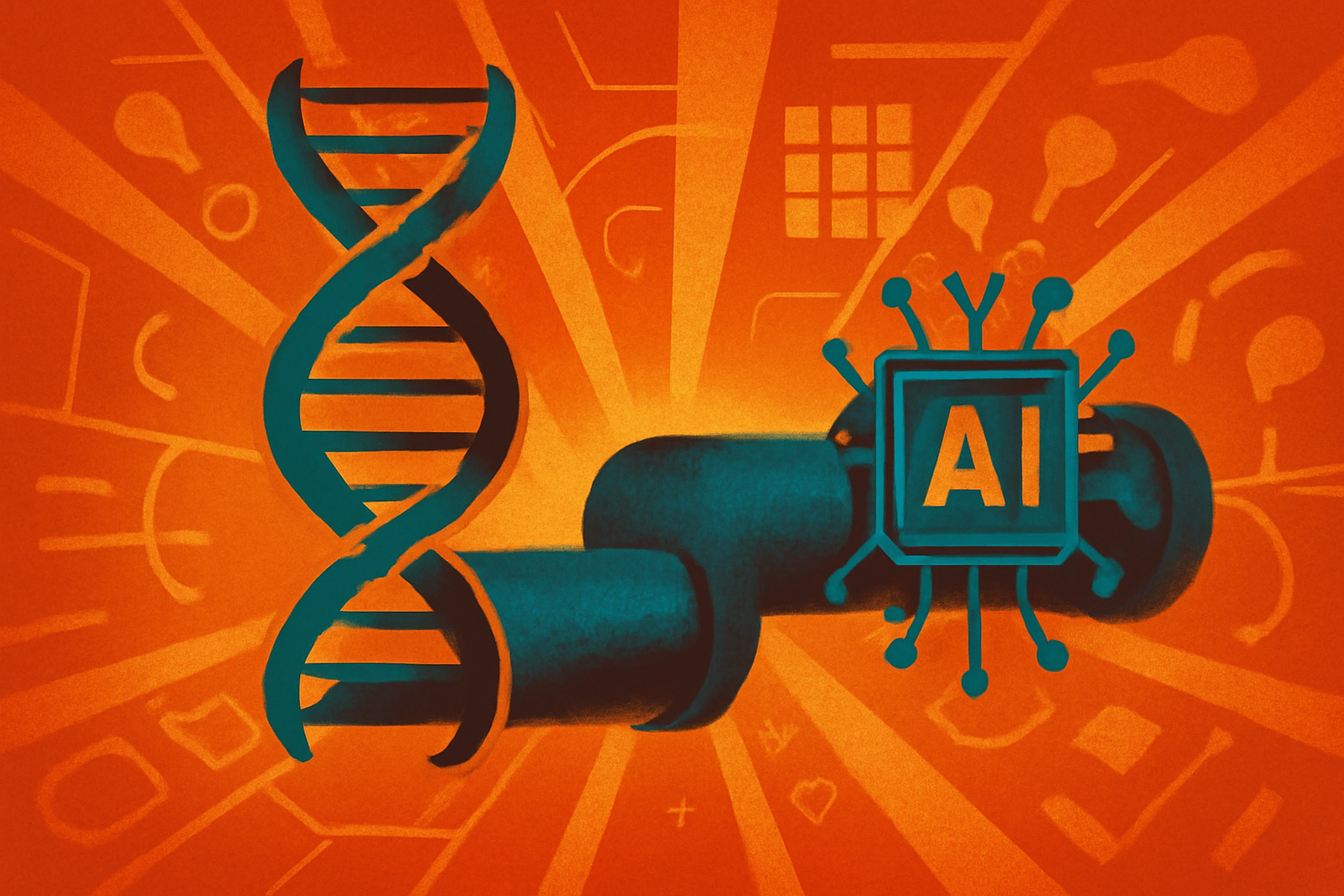
A digital representation of a DNA strand with highlighted data points on a laboratory monitor, symbolizing AI genetic discovery.
Photo: Avantgarde News
Researchers at Stanford University School of Medicine and Google DeepMind have developed an AI pipeline to find rare disease causes [1]. The system uses large language models like Gemini 2.5 Pro to pinpoint genetic factors [1][3]. These tools identified causative variants in patients with undiagnosed syndromes without specialized medical fine-tuning [1][2].
The AI system helps bridge gaps in clinical genetics by processing complex data sets [2]. This method allows for genetic diagnosis and discovery even when specific medical training is absent [1][3]. Such breakthroughs could help thousands of patients currently lacking a clear diagnosis [1].
Editorial notes
Transparency note
AI assisted drafting. Human edited and reviewed.
- AI assisted
- Yes
- Human review
- Yes
- Last updated
Risk assessment
Reviewed for sourcing quality and editorial consistency.
Sources
- 1.↗
advancedsciencenews.com
https://www.advancedsciencenews.com/ai-pipelines-correctly-identify-genetic-basis-for-disease-even-without-medical-training/
- 2.↗
aimi.stanford.edu
https://aimi.stanford.edu/events/grand-rounds/aimi-grand-rounds-genetic-diagnosis-and-discovery-enabled-large-language-models
- 3.↗
researchgate.net
https://www.researchgate.net/publication/400580832_Genetic_Diagnosis_and_Discovery_Enabled_by_Large_Language_Models
Related stories
View all

Topics
About the author
Avantgarde News Desk covers enhancing rare disease discovery and editorial analysis for Avantgarde News.