
How Synthetic DNA Logic Gates Target Tumors
UNIGE DNA System Targets Cancer with Logic Gate Precision
Researchers at the University of Geneva develop a smart DNA drug-delivery system to protect healthy tissue.
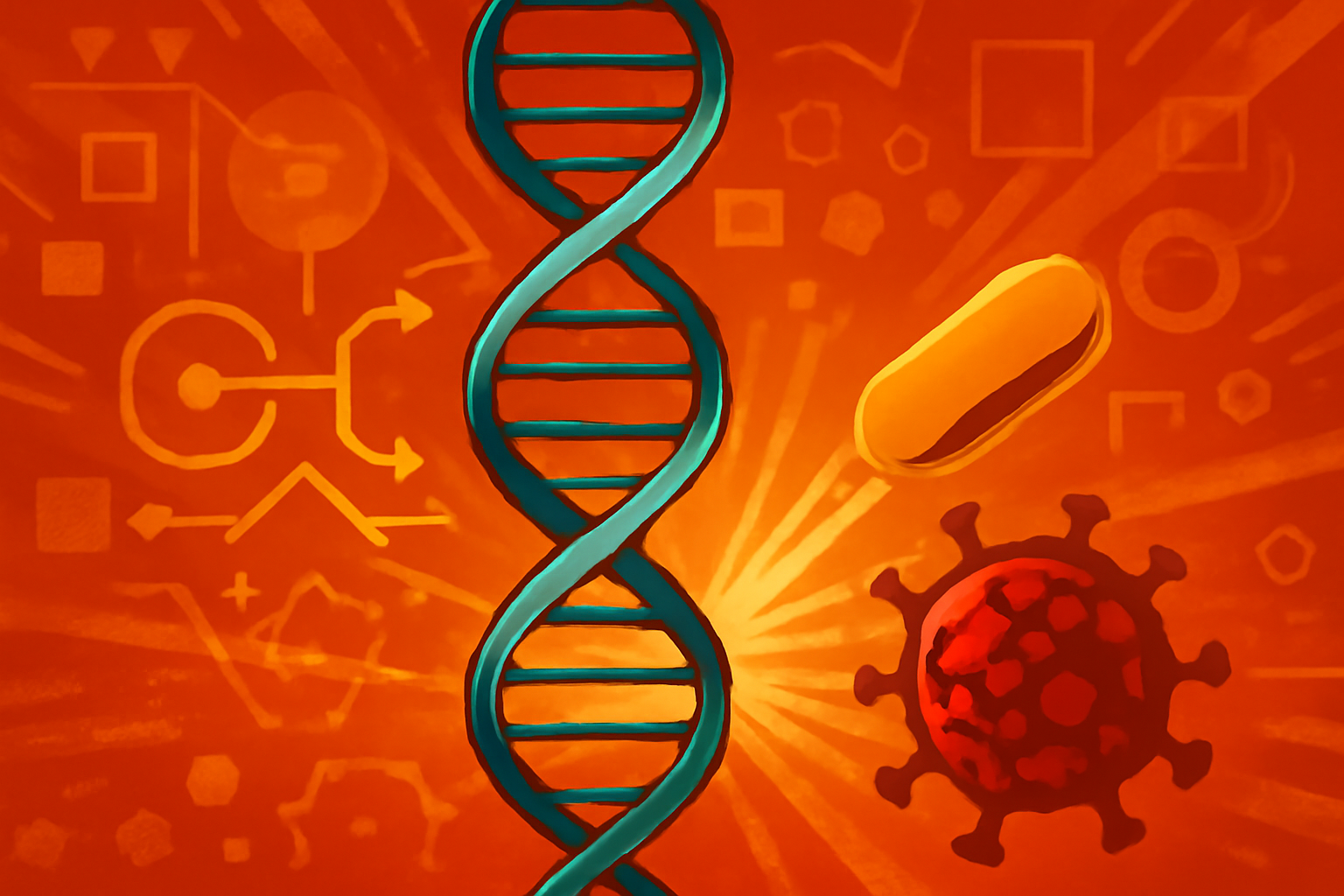
A 3D digital rendering of synthetic DNA strands programmed to deliver drugs to specific cancer cells, highlighting precision medicine technology.
Photo: Avantgarde News
Researchers at the University of Geneva (UNIGE) have developed a programmable drug-delivery system using synthetic DNA [1]. This "smart" technology identifies specific combinations of tumor markers to release medication directly into cancer cells [2]. The breakthrough ensures that powerful drugs are only activated upon contact with malignant tissue, leaving healthy cells unharmed [3]. The delivery system operates using "AND gate" logic, similar to a computer processor [1]. It requires multiple markers to be present before the drug is released, which increases the accuracy of the treatment [2]. Experts believe this method could significantly improve precision cancer therapy by reducing side effects [3].
Editorial notes
Transparency note
Drafted with LLM; human-edited
- AI assisted
- Yes
- Human review
- Yes
- Last updated
Risk assessment
Reviewed for sourcing quality and editorial consistency.
Sources
- 1.↗
sciencedaily.com
https://www.sciencedaily.com/releases/2026/04/260402042744.htm
- 2.↗
vertexaisearch.cloud.google.com
https://vertexaisearch.cloud.google.com/grounding-api-redirect/AUZIYQF8WiIYx-W6zBDIROfLINj6gWGvhtLf6j6NxAyZbqU5Qa7QfHGle7gWi6j9IYVVqIJ4729yWlgcA3Hz6kA0OO5Q1Y9xtRvUf6C-hhk5PuwvzVoWlUSnhNnslmfpn-z2zMJIP9z8IaVcLHd85mBv9Ezh-_FA_ukJOBs01wWDFWhSaGAQOQhPTAMIkJQVzTEh4u9vARJCEQlb=
- 3.↗
darkwiretrancendental.com
https://darkwiretrancendental.com/article/smart-dna-drug-delivery-how-cancer-and-gates-target-tumors-precisely
Related stories
View all


Topics
About the author
Avantgarde News Desk covers how synthetic dna logic gates target tumors and editorial analysis for Avantgarde News.