
Building Trust Through Shared Mental Models
Stevens Researchers Propose AI 'Cognitive Alignment'
A new study suggests shared mental models are essential for successful human-AI collaboration and workplace trust.
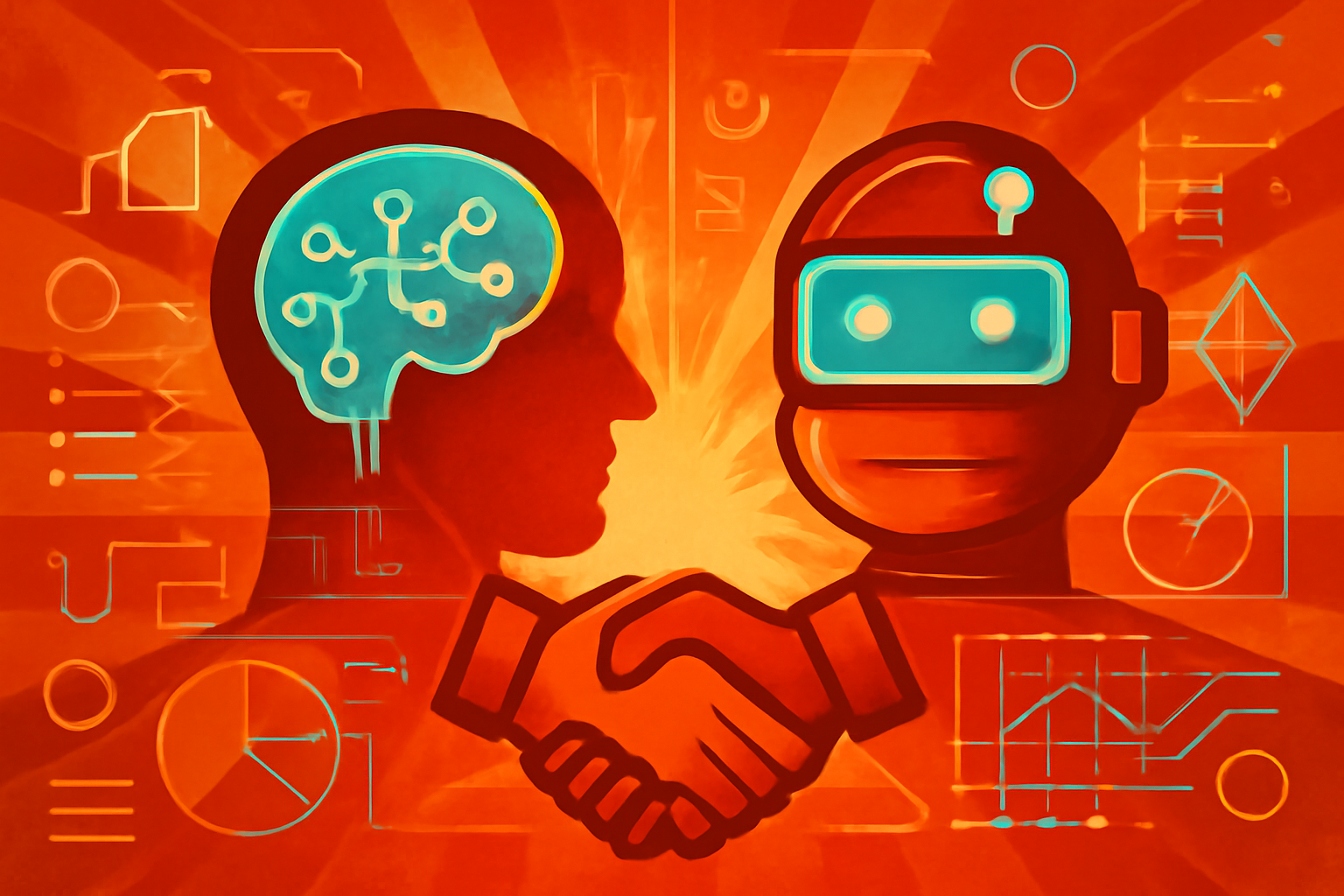
A conceptual illustration of a human and robotic hand reaching toward a central glowing node of light, symbolizing cognitive alignment and collaboration between humans and artificial intelligence.
Photo: Avantgarde News
Researchers at the Stevens Institute of Technology have introduced a new framework called "hybrid cognitive alignment" to improve human-AI collaboration [1][3]. Assistant Professor Bei Yan published the study in the Academy of Management Journal [2]. The research argues that for AI integration to succeed, humans and machines must develop shared mental models [1][2]. This alignment helps calibrate trust and judgment between the two parties [1]. By understanding how an AI makes decisions, human workers can better predict outcomes and rely on the technology appropriately [2]. The study suggests that this cognitive connection is vital for long-term workplace efficiency and effective integration [3].
Editorial notes
Transparency note
Drafted with LLM; human-edited
- AI assisted
- Yes
- Human review
- Yes
- Last updated
Risk assessment
Reviewed for sourcing quality and editorial consistency.
Sources
- 1.↗
eurekalert.org
https://www.eurekalert.org/news-releases/1117984
- 2.↗
stevens.edu
https://www.stevens.edu/news/for-humans-and-ai-to-work-well-together-they-must-form-a-cognitive-alignment
- 3.↗
scienmag.com
https://scienmag.com/stevens-researchers-highlight-the-need-for-cognitive-alignment-to-enhance-human-ai-collaboration/
Related stories
View all

Topics
About the author
Avantgarde News Desk covers building trust through shared mental models and editorial analysis for Avantgarde News.