
Merging Biology and Quantum Physics
New Hybrid AI Boosts Scientific Discovery Reliability
Washington University researchers merge neuromorphic biology with quantum annealing for complex problem solving.
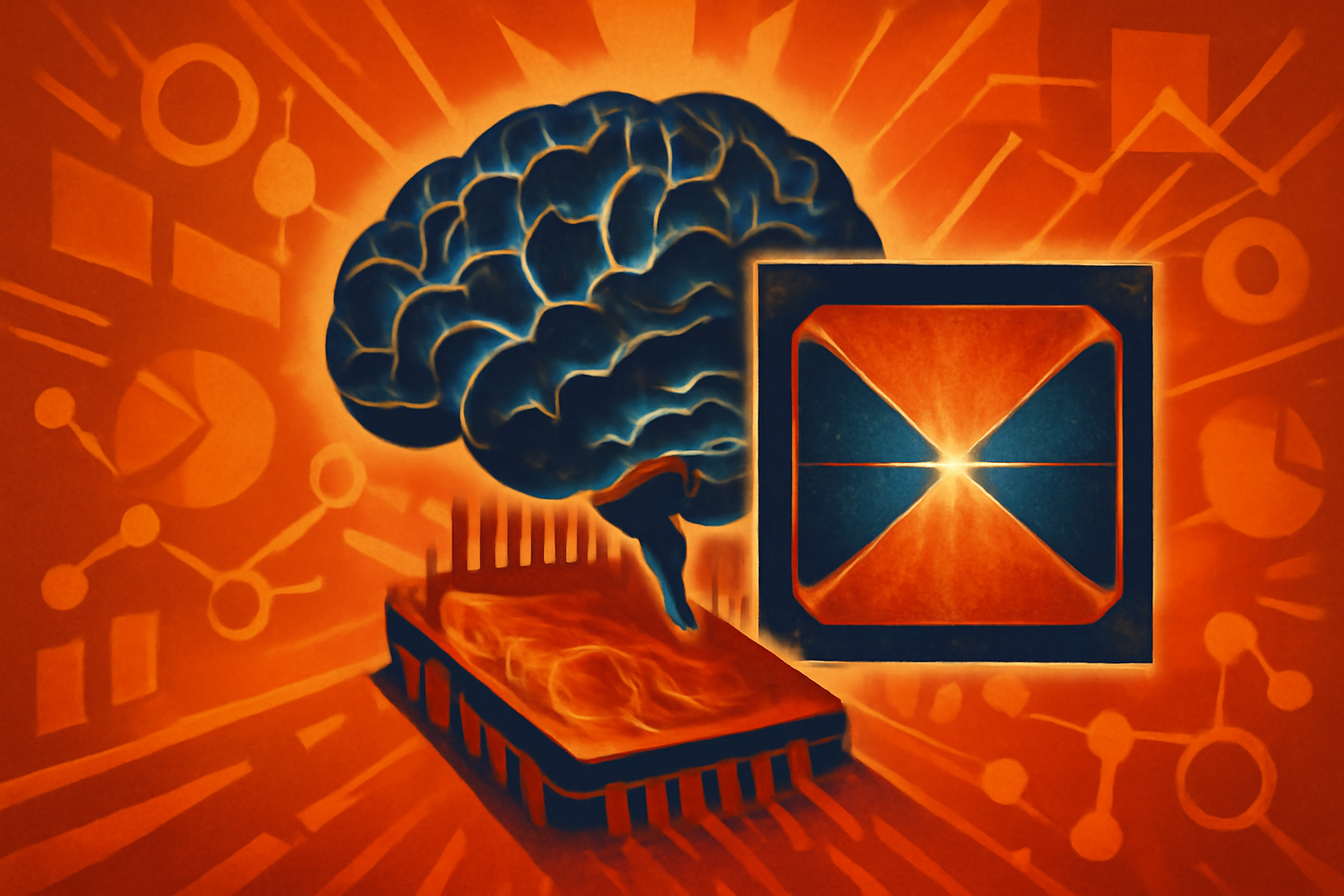
A conceptual graphic showing a blue digital brain structure merging with abstract quantum wave patterns.
Photo: Avantgarde News
Researchers at Washington University in St. Louis have developed a hybrid AI architecture for complex scientific challenges [1]. This system combines neuromorphic neurobiology models with quantum mechanics-based annealing to ensure reliable results [1][2]. The integration allows the technology to function as a discovery machine that finds optimal solutions for researchers [1].
Unlike traditional systems, this hybrid approach addresses consistency issues in neuromorphic computing [1]. By utilizing quantum principles, the architecture provides a more stable framework for scientific advancement [1][2]. This development marks a significant shift in how AI assists in large-scale data analysis and discovery [1].
Editorial notes
Transparency note
AI assisted drafting. Human edited and reviewed.
- AI assisted
- Yes
- Human review
- Yes
- Last updated
Risk assessment
The provided source list contains only two independent domains, failing the recommendation for at least three independent sources.
Sources
Related stories
View all

Topics
About the author
Avantgarde News Desk covers merging biology and quantum physics and editorial analysis for Avantgarde News.