
AI-Driven Trajectory and Support
NASA Artemis II Uses AI for Lunar Mission Control
New AI algorithms and digital twins monitor systems and trajectories as crew travels beyond previous human records.
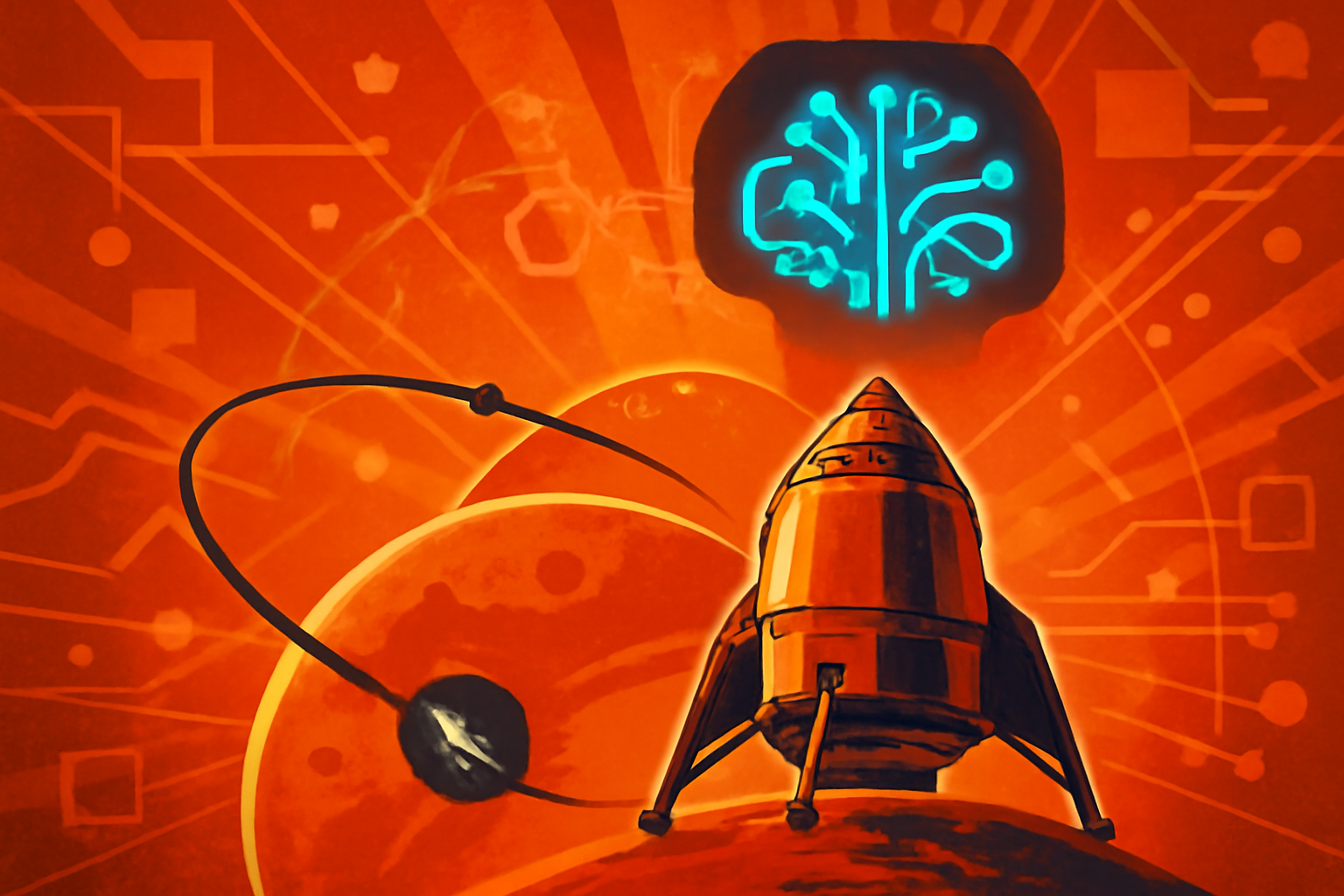
A wide-angle view of a NASA control room showing large digital displays of the Moon and the Orion spacecraft with AI data overlays.
Photo: Avantgarde News
NASA’s Artemis II mission launched on April 1, 2026, marking a significant milestone in lunar exploration [1][3]. The spacecraft is currently utilizing advanced artificial intelligence to manage mission control systems in real-time [1]. These systems provide autonomous oversight as the crew travels farther from Earth than any previous human mission [1][3]. Mission control integrates digital twin simulations to monitor life-support hardware and calculate trajectory corrections [1]. This technology enables the crew to make precise adjustments during their transit to the Moon [1]. Such advancements are viewed as a critical evolution for humanity's long-term future in space [2].
Editorial notes
Transparency note
Drafted with LLM; human-edited
- AI assisted
- Yes
- Human review
- Yes
- Last updated
Risk assessment
Reviewed for sourcing quality and editorial consistency.
Sources
- 1.↗
pymnts.com
https://www.pymnts.com/artificial-intelligence-2/2026/ai-takes-on-mission-control-as-artemis-ii-heads-for-the-moon/
- 2.↗
avi-loeb.medium.com
https://avi-loeb.medium.com/the-unbearable-lightness-of-artemis-ii-and-our-future-among-the-stars-f55c7326b82d
- 3.↗
nasa.gov
https://www.nasa.gov/mission/artemis-ii/
Related stories
View all
Topics
About the author
Avantgarde News Desk covers ai-driven trajectory and support and editorial analysis for Avantgarde News.