
Advancing Autonomous Lunar Exploration
Moon Rover Gets AI Brain for Autonomous Science
HPE and Astrolab integrate edge computing into FLIP rover for real-time lunar data analysis.
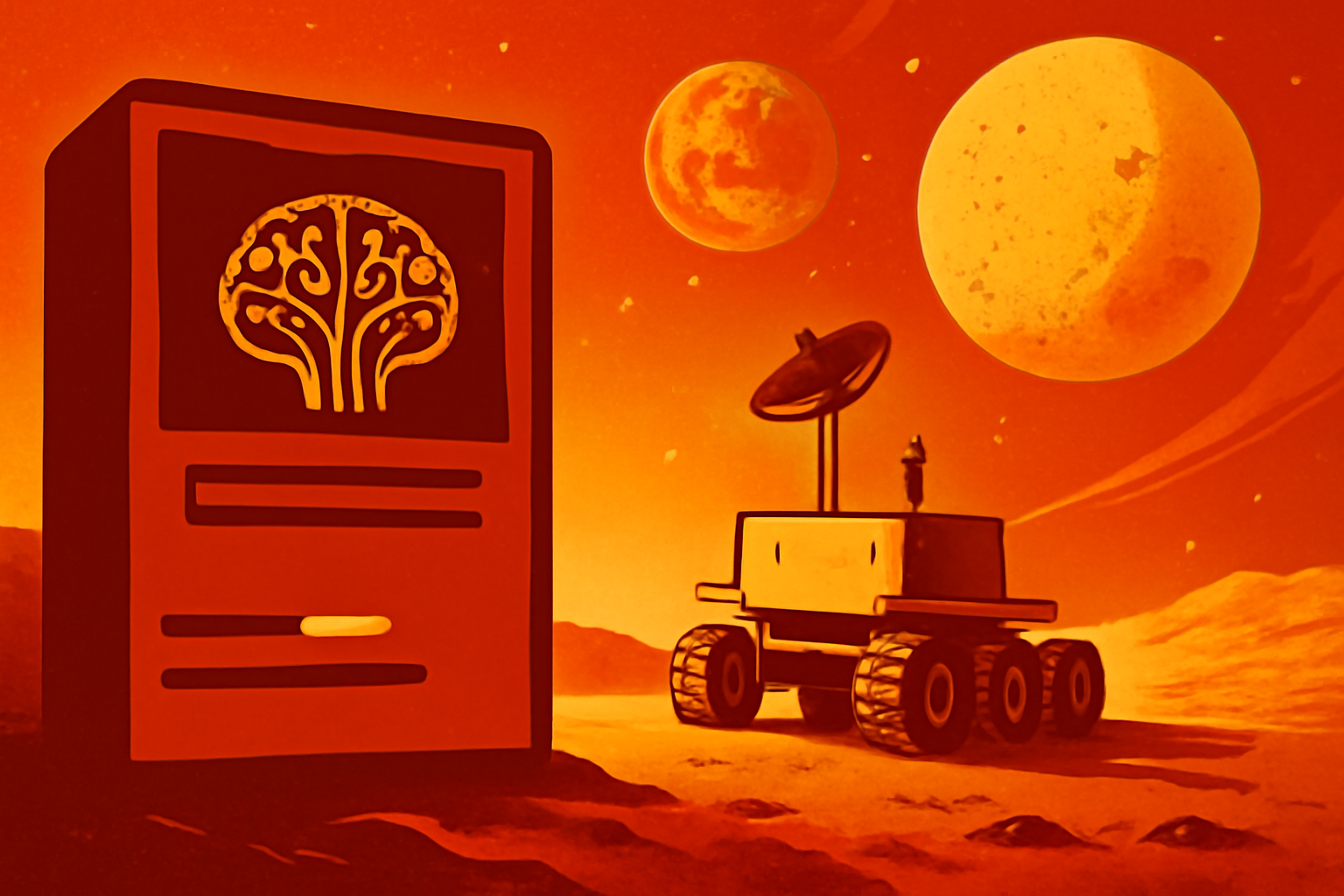
A high-tech lunar rover on the Moon's cratered surface with the Earth visible in the background, representing the integration of AI edge computing for autonomous space missions.
Photo: Avantgarde News
Astrolab confirmed in February 2026 the successful mechanical integration of Hewlett Packard Enterprise’s (HPE) Spaceborne Computer into its FLIP lunar rover [1][2]. This "AI brain" enables the vehicle to process scientific data in real-time directly on the Moon’s surface [2]. By utilizing edge computing, the rover avoids the significant delays usually required to transmit large raw data files to Earth for processing [1][3]. The FLIP rover, or FLEX Lunar Innovation Platform, serves as a technology demonstrator for Astrolab’s larger flagship vehicles [2]. It is scheduled to land at the lunar South Pole in summer 2026 aboard the Griffin-1 lander [1][2]. The AI system will support mission-critical tasks such as mapping water ice and detecting Helium-3 deposits without waiting for terrestrial commands [1]. This partnership aims to establish a reliable "mobility layer" for the emerging lunar economy [3]. HPE’s ruggedized computing hardware, which was previously tested on the International Space Station, allows the rover to navigate and operate autonomously in harsh lunar environments [2]. Experts suggest these autonomous systems could eventually be adapted for use in remote disaster zones on Earth [1].
Editorial notes
Transparency note
Drafted with LLM; human-edited
- AI assisted
- Yes
- Human review
- Yes
- Last updated
Risk assessment
Reviewed for sourcing quality and editorial consistency.
Sources
Related stories
View all


Topics
About the author
Avantgarde News Desk covers advancing autonomous lunar exploration and editorial analysis for Avantgarde News.