
Rethinking Vision Through Bio-Inspired Robotics
Insect Brain Discovery Sparks AI Breakthrough
University of Sheffield research on fruit flies offers a blueprint for energy-efficient robotics and AI.
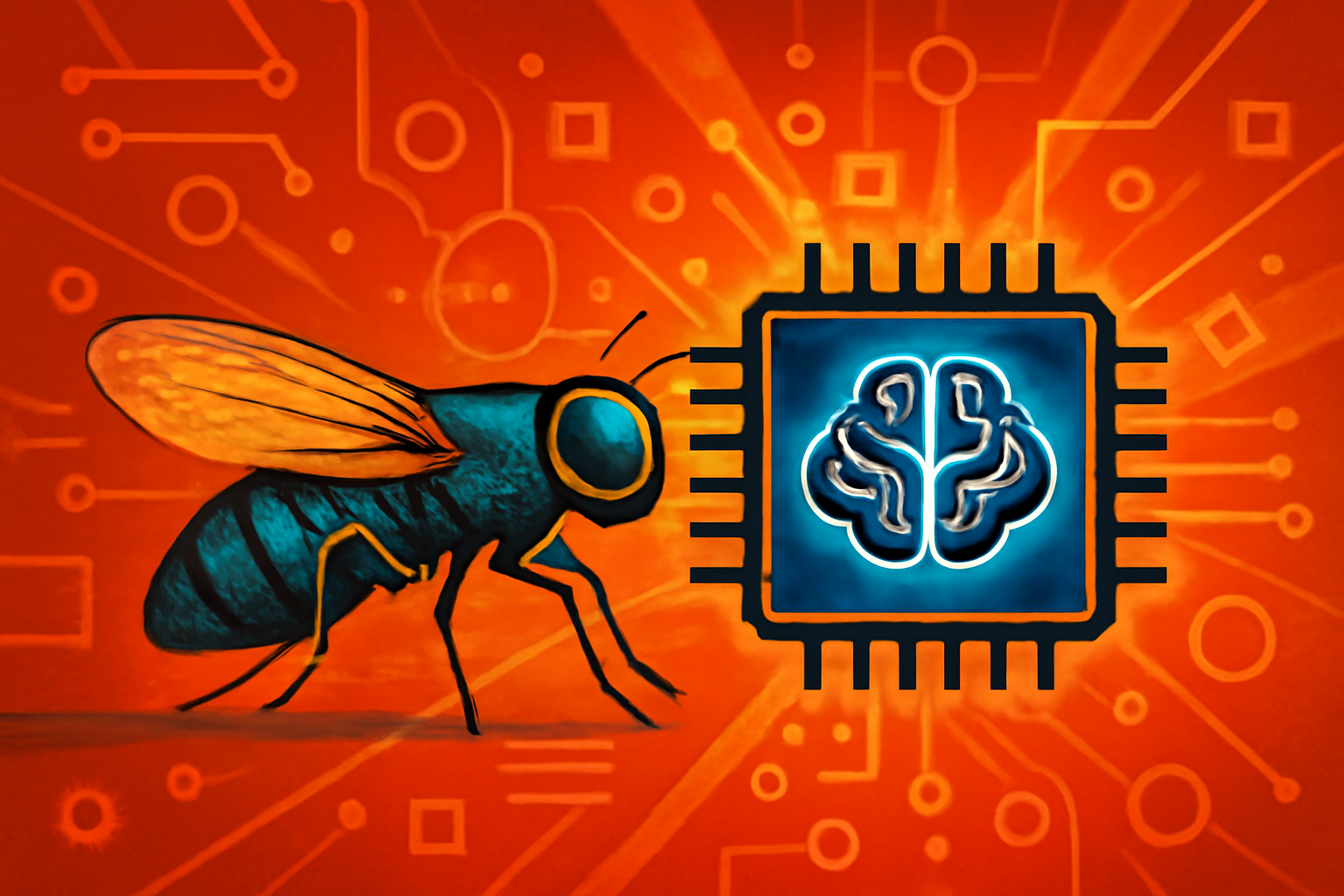
A conceptual illustration showing the intersection of biology and technology, featuring the neural network of an insect brain connected to digital circuits and robotic elements.
Photo: Avantgarde News
Researchers at the University of Sheffield revealed how insects use "turbo boost" neural features to react within milliseconds [1]. The study indicates that vision is an active partnership between physical movement and the brain [1][2]. This discovery suggests a new model for energy-efficient AI that mimics how fruit flies process information [1].
By imitating movement-driven processing, engineers can create faster robots with lower power requirements [2]. These findings challenge traditional understandings of vision by showing that movement actively aids brain processing [1][2]. Future robotics may rely on these biological blueprints to improve real-world performance [1].
Editorial notes
Transparency note
AI assisted drafting. Human edited and reviewed.
- AI assisted
- Yes
- Human review
- Yes
- Last updated
Risk assessment
Risk level escalated to high because the provided source list contains only two independent domains, falling short of the recommended three-domain minimum for robust cross-verification.
Sources
Related stories
View all


Topics
About the author
Avantgarde News Desk covers rethinking vision through bio-inspired robotics and editorial analysis for Avantgarde News.