How the Self-Evolution Loop Works
ASI-Evolve AI Model Mimics Scientific Discovery Loops
Shanghai researchers unveil a framework that autonomously improves its own architecture and learning algorithms.
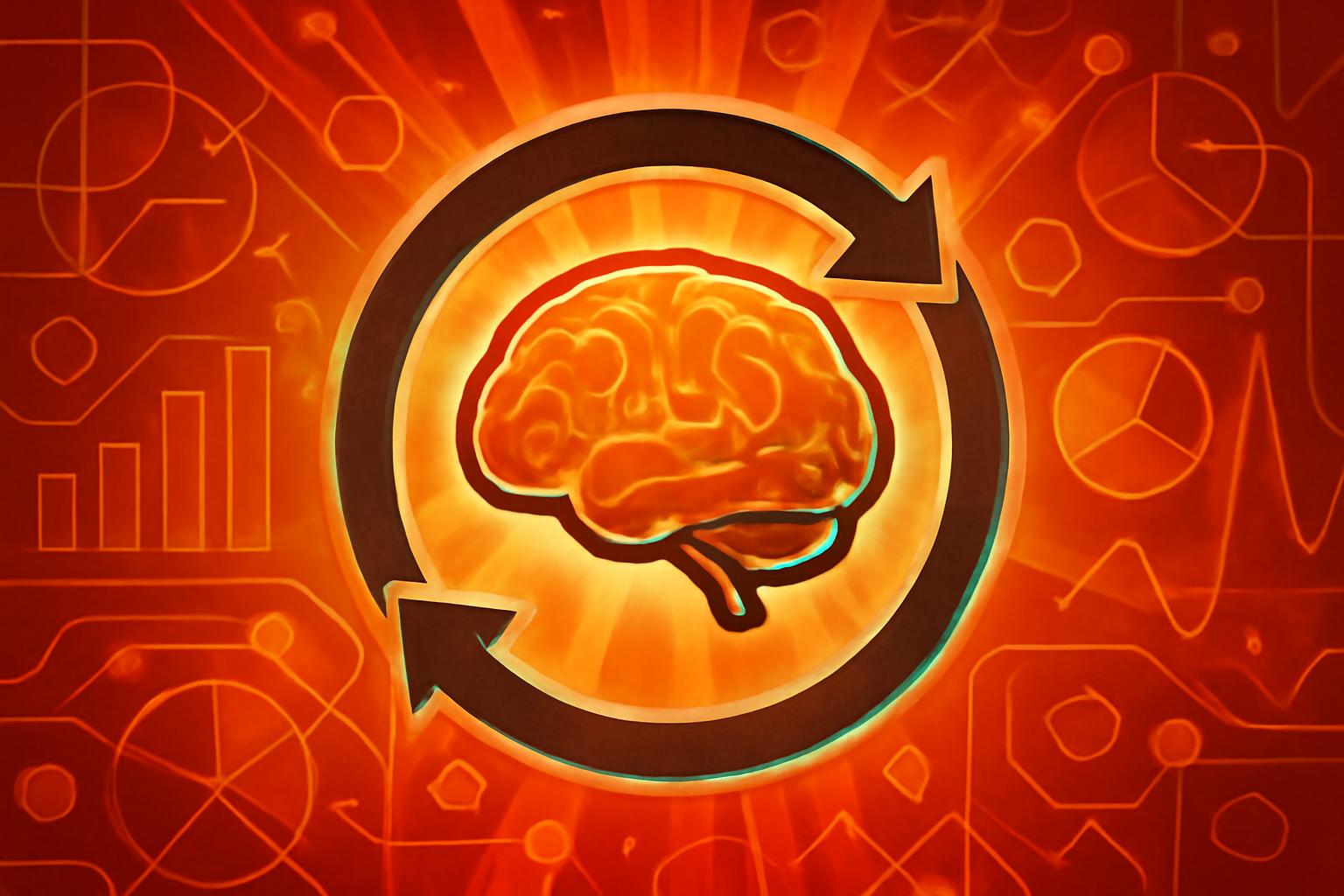
A holographic blue neural network structure forming a circular loop with floating code symbols, representing self-improving artificial intelligence.
Photo: Avantgarde News
Scientists at Shanghai Jiao Tong University introduced ASI-Evolve, an agentic framework designed to automate AI development [1]. The system improves its own architecture and learning algorithms by closing the loop between hypothesis and analysis [1][2].
The model operates like a scientific discovery process. It generates new ideas, tests them through experiments, and refines its performance based on results [1]. This autonomous cycle allows the AI to evolve without constant human intervention [2].
By managing data and architectures internally, ASI-Evolve aims to speed up machine learning progress [1]. The researchers believe this approach reflects how humans conduct scientific research [1][2].
Editorial notes
Transparency note
AI assisted drafting. Human edited and reviewed.
- AI assisted
- Yes
- Human review
- Yes
- Last updated
Risk assessment
Risk level set to high because the source list contains only two independent domains, falling below the recommended minimum of three.
Sources
Related stories
View all

Topics
About the author
Avantgarde News Desk covers how the self-evolution loop works and editorial analysis for Avantgarde News.