
Streamlining Preterm Birth Prediction
AI Matches Medical Experts in Data Analysis Speed
Researchers at UCSF and Wayne State University find generative AI predicts preterm birth risks in minutes, not months.
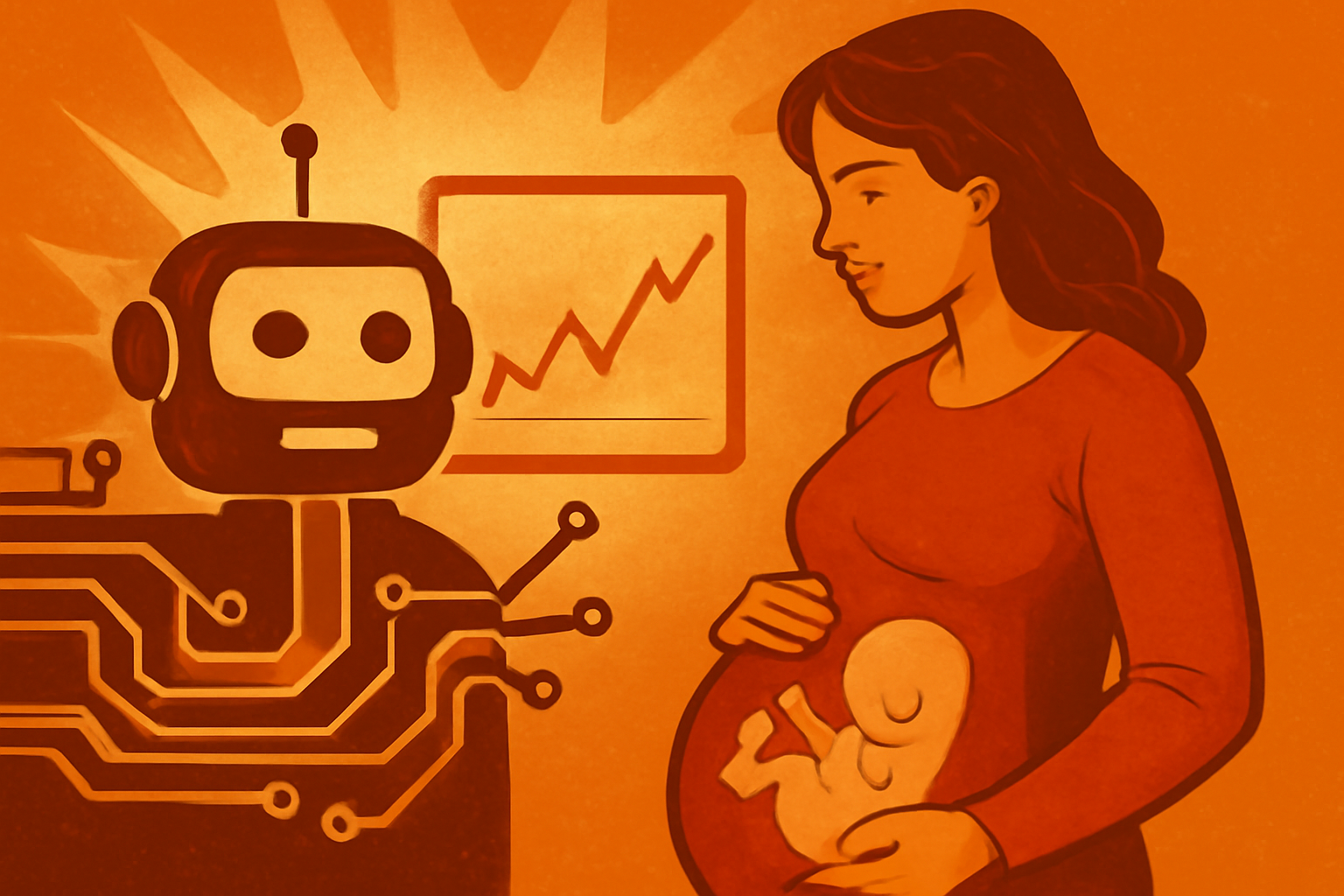
A modern medical lab screen showing digital neural networks and health data charts related to pregnancy, with a blurred scientist in the background.
Photo: Avantgarde News
Scientists at UC San Francisco and Wayne State University have demonstrated that generative AI can analyze complex medical datasets significantly faster than human research teams [1][2]. In a head-to-head test, the AI predicted preterm birth risks with accuracy that matched or exceeded human experts [1][3]. While human teams spent months developing models, AI tools generated functional code in minutes [2]. The study used data from over 1,000 pregnant women to identify biomarkers and estimate gestational age [1][2]. Researchers found that four out of eight tested AI chatbots successfully built analysis pipelines with minimal human guidance [2][3]. This efficiency allowed a small team to complete a project—from concept to journal submission—in just six months [3]. Health professionals suggest these tools could eliminate major bottlenecks in biomedical research [1]. By automating code generation, scientists can focus on interpreting results rather than debugging scripts [2]. However, experts emphasize that human oversight remains essential to ensure the validity of AI-generated medical findings [2][3].
Editorial notes
Transparency note
Drafted with LLM; human-edited
- AI assisted
- Yes
- Human review
- Yes
- Last updated
Risk assessment
Reviewed for sourcing quality and editorial consistency.
Sources
Related stories
View all

Topics
About the author
Avantgarde News Desk covers streamlining preterm birth prediction and editorial analysis for Avantgarde News.