
Real-Time Control for Next-Generation Physics
AI Accelerates X-Ray Laser Simulations by 250x
Physicists at SLAC and UCLA develop a deep-learning model to enable real-time control of ultrafast laser systems.
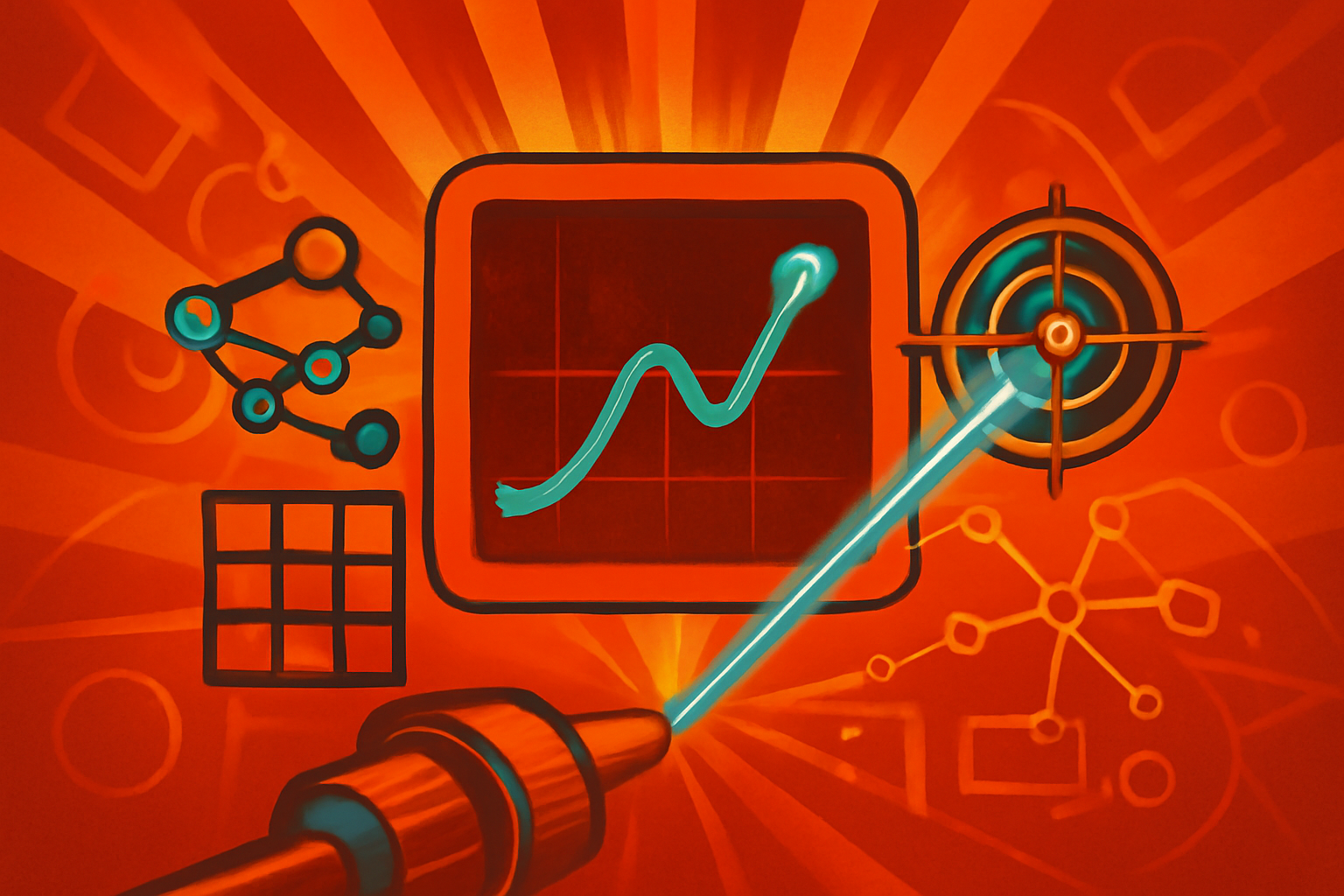
A sophisticated laboratory setting featuring blue laser equipment and a digital overlay representing real-time physics simulations.
Photo: Avantgarde News
Physicists from the SLAC National Accelerator Laboratory and UCLA developed a deep-learning surrogate model that speeds up laser simulations [1]. This new tool completes complex frequency conversion tasks in milliseconds [2]. Traditional computational methods are over 250 times slower than this AI-driven approach [1][3].
This breakthrough allows scientists to manage ultrafast laser systems in real time [1]. Researchers can now create digital twins for next-generation X-ray experiments [2]. The shortcut overcomes a major bottleneck in physics by providing nearly instant feedback for experimental adjustments [2][3].
Editorial notes
Transparency note
AI assisted drafting. Human edited and reviewed.
- AI assisted
- Yes
- Human review
- Yes
- Last updated
Risk assessment
Reviewed for sourcing quality and editorial consistency.
Sources
- 1.↗
earth.com
https://www.earth.com/news/a-slow-laser-bottleneck-just-got-a-250x-ai-shortcut-for-next-generation-x-ray-experiments/
- 2.↗
scitechdaily.com
https://scitechdaily.com/scientists-use-ai-to-supercharge-ultrafast-laser-simulations-by-more-than-250x/
- 3.↗
lifeboat.com
https://lifeboat.com/blog/2026/05/scientists-use-ai-to-supercharge-ultrafast-laser-simulations-by-more-than-250x
Related stories
View all


Topics
About the author
Avantgarde News Desk covers real-time control for next-generation physics and editorial analysis for Avantgarde News.