
Advancing Biochemistry and Protein Engineering
OpenAI Launches GPT-Rosalind for Drug Discovery
The new reasoning model targets biochemistry and genomics to accelerate early-stage medical research and drug design.
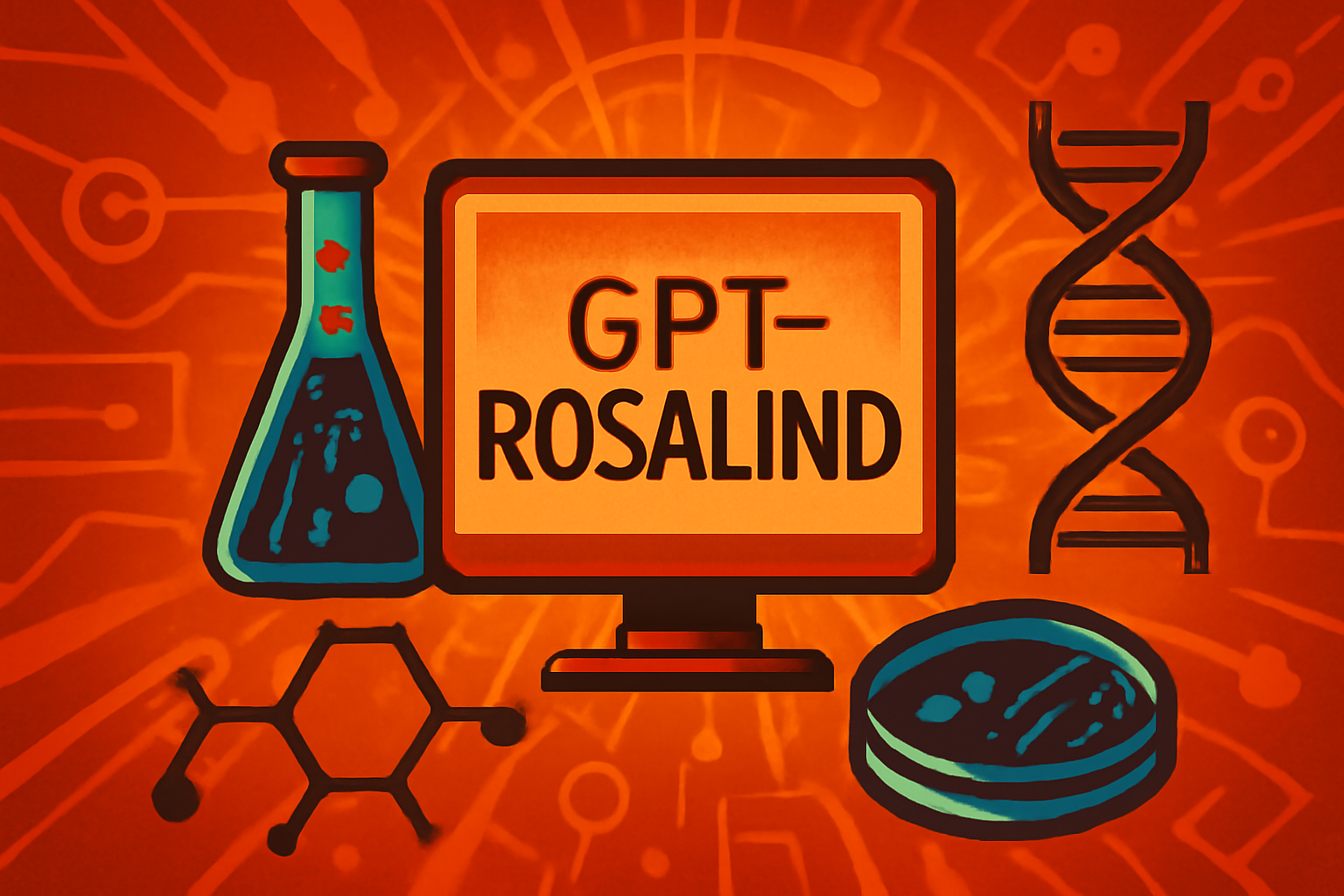
A computer screen in a lab displaying colorful 3D protein models and DNA strands used in drug discovery research.
Photo: Avantgarde News
OpenAI launched GPT-Rosalind on April 17, 2026, as a specialized AI tool for life sciences research [1]. The model focuses on biochemistry, genomics, and protein engineering to assist scientific teams [2]. It helps with synthesizing evidence and generating new hypotheses for complex drug discovery [3]. This new tool aims to speed up the early stages of medical research and development [2]. It also assists researchers in designing experiments more effectively through advanced reasoning [3]. By entering this specialized field, OpenAI is competing directly with similar AI projects from Google [1].
Editorial notes
Transparency note
Drafted with LLM; human-edited
- AI assisted
- Yes
- Human review
- Yes
- Last updated
Risk assessment
Reviewed for sourcing quality and editorial consistency.
Sources
- 1.↗
latimes.com
https://www.latimes.com/business/story/2026-04-17/openai-takes-on-google-with-new-ai-designed-to-speed-drug-discovery
- 2.↗
thenextweb.com
https://thenextweb.com/news/openai-gpt-rosalind-life-sciences-drug-discovery-ai-model
- 3.↗
pharmaphorum.com
https://pharmaphorum.com/news/openai-introduces-gpt-rosalind-its-drug-discovery-ai
Related stories
View all

Topics
About the author
Avantgarde News Desk covers advancing biochemistry and protein engineering and editorial analysis for Avantgarde News.