
Advances in Neuroprosthetic Communication
Northwestern Prints Neurons That Talk to Living Cells
Flexible artificial neurons bridge the gap between electronics and the brain for better neuroprosthetics.
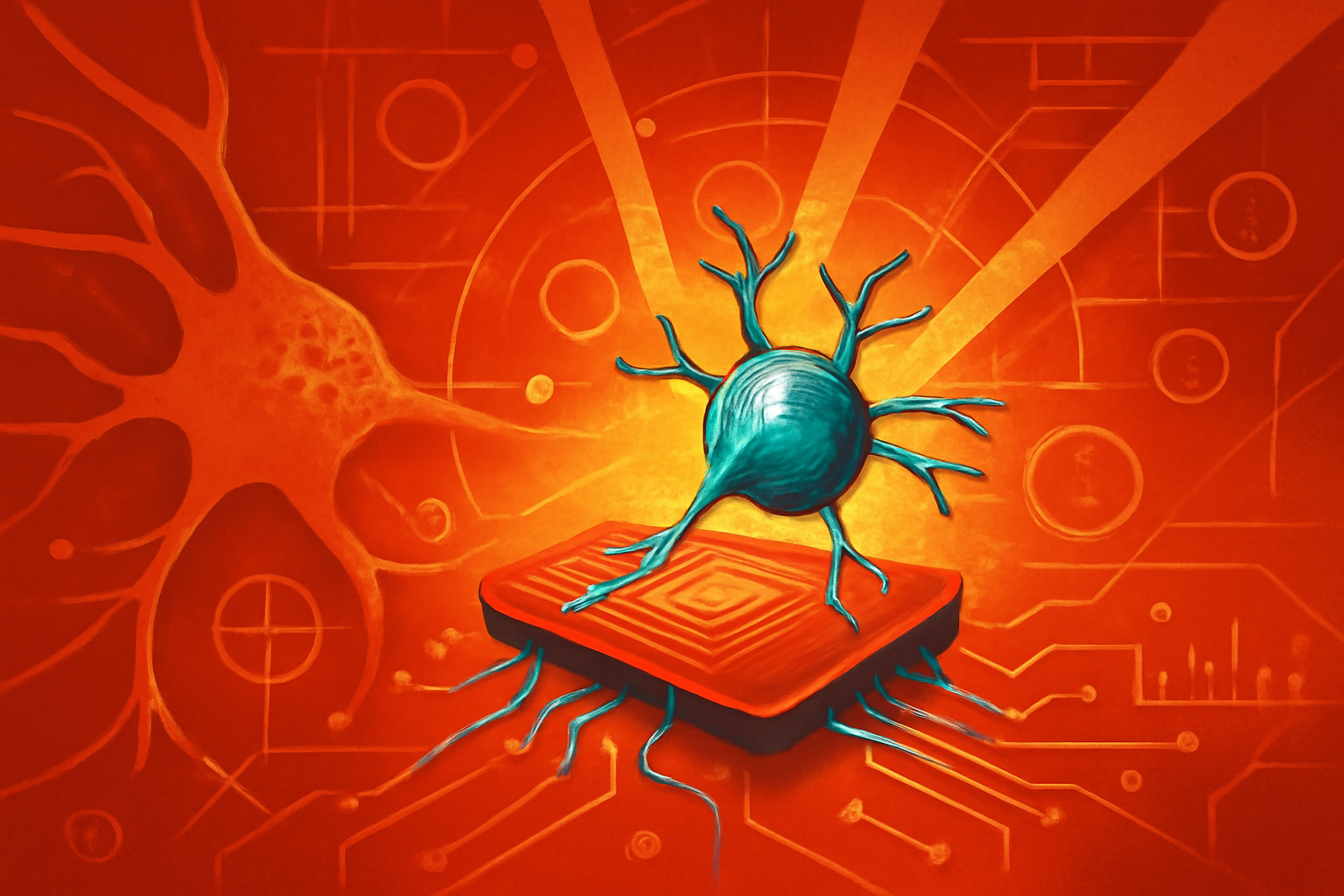
A close-up of a translucent and flexible 3D-printed artificial neuron circuit with glowing pathways in a laboratory setting.
Photo: Avantgarde News
Engineers at Northwestern University printed flexible, low-cost artificial neurons [1]. These devices can communicate directly with biological brain cells [2]. In recent tests, the artificial neurons triggered responses within mouse brain tissue [3].
The research team designed these components to be highly energy-efficient for future AI hardware [1]. They used soft materials that mimic the properties of living tissue [2]. This breakthrough could lead to advanced neuroprosthetics and better brain-computer interfaces [3].
Unlike traditional rigid electronics, these printed neurons integrate safely with biological systems [1]. Researchers believe this technology could transform how doctors treat various neurological conditions [2]. Details regarding human clinical trials were not confirmed in the available sources.
Editorial notes
Transparency note
AI assisted drafting. Human edited and reviewed.
- AI assisted
- Yes
- Human review
- Yes
- Last updated
Risk assessment
Reviewed for sourcing quality and editorial consistency.
Sources
- 1.↗
news.feinberg.northwestern.edu
https://news.feinberg.northwestern.edu/2026/04/27/printed-neurons-communicate-with-living-brain-cells/
- 2.↗
livescience.com
https://www.livescience.com/health/neuroscience/scientists-invent-artificial-neurons-that-talk-to-real-brain-cells-paving-way-to-better-brain-implants
- 3.↗
neurosciencenews.com
https://neurosciencenews.com/printed-artificial-neurons-brain-communication-30529/
Related stories
View all


Topics
About the author
Avantgarde News Desk covers advances in neuroprosthetic communication and editorial analysis for Avantgarde News.