
Improving Drug Discovery with Dual-Scale Encoding
New BiScale-GTR Model Advances Molecular Research
Researchers debut a fragment-aware graph transformer achieving state-of-the-art accuracy for drug discovery.
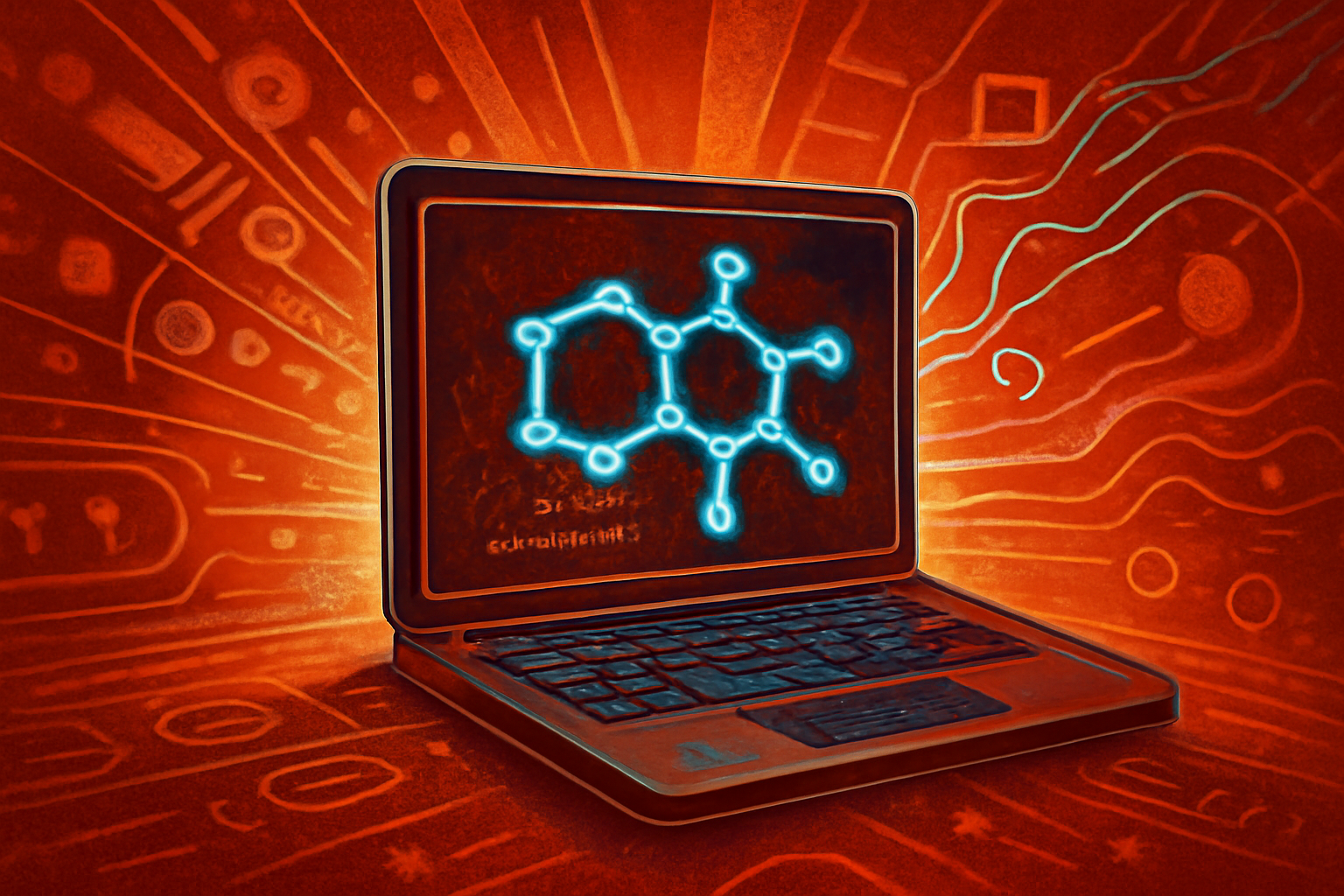
A 3D digital model of a molecular structure displayed on a screen in a research lab, highlighting atom-level and fragment-level connections.
Photo: Avantgarde News
Researchers have introduced BiScale-GTR, a new architecture designed to improve how artificial intelligence learns molecular representations [1][2]. The model utilizes a dual approach by combining atom-level encoding with fragment-level tokenization [1][3]. This allows the system to analyze both fine-grained chemical details and larger molecular structures simultaneously to improve predictive performance [3]. The architecture has achieved state-of-the-art accuracy in predicting various molecular properties according to recent benchmarks [1][2]. These advancements have significant implications for fields such as drug discovery and materials science, potentially speeding up the identification of effective chemical compounds [2][3].
Editorial notes
Transparency note
Drafted with LLM; human-edited
- AI assisted
- Yes
- Human review
- Yes
- Last updated
Risk assessment
Reviewed for sourcing quality and editorial consistency.
Sources
Related stories
View all
Topics
About the author
Avantgarde News Desk covers improving drug discovery with dual-scale encoding and editorial analysis for Avantgarde News.