
Advancing Autonomous Decision-Making in Space
NASA Tests New AI Chip for Deep Space Autonomy
The High Performance Spaceflight Computing processor offers a massive boost in power for Moon and Mars missions.
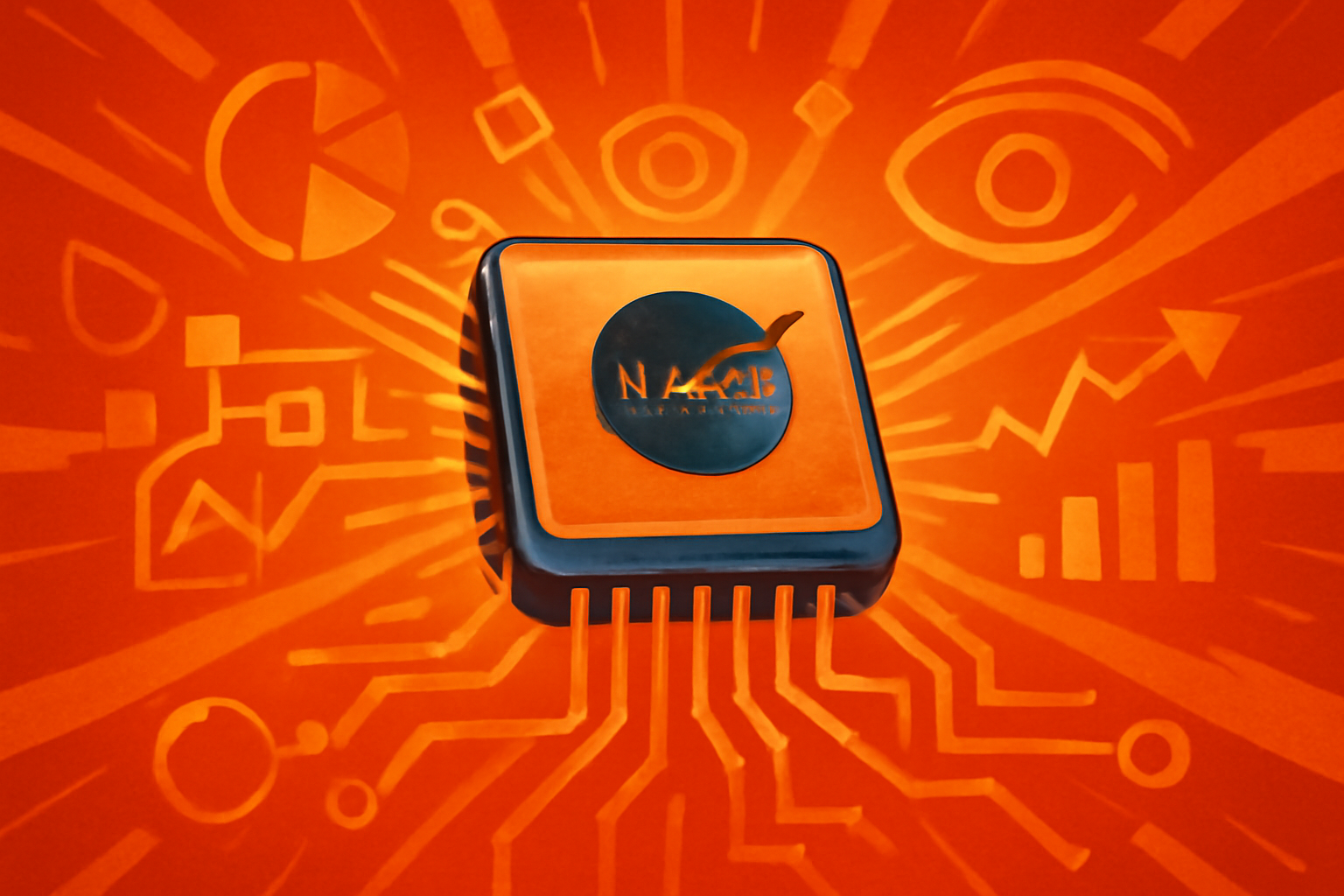
A high-tech microprocessor labeled HPSC with the NASA logo on a glowing circuit board with a backdrop of a starry sky and the planet Mars.
Photo: Avantgarde News
NASA’s Jet Propulsion Laboratory is currently testing the High Performance Spaceflight Computing (HPSC) processor to advance deep space exploration [1][2]. This radiation-hardened chip provides at least 100 times the computing power of current electronics used in orbit [1]. Some estimates suggest the technology may offer up to 500 times the processing speed of existing systems [3].
This breakthrough enables AI-powered spacecraft to operate independently and make real-time decisions during missions to the Moon and Mars [1]. The shift toward autonomy is essential for navigating complex environments where communication delays with Earth are significant [2]. By processing data locally, future probes can respond instantly to scientific discoveries or technical hazards [1][3].
Editorial notes
Transparency note
AI assisted drafting. Human edited and reviewed.
- AI assisted
- Yes
- Human review
- Yes
- Last updated
Risk assessment
Reviewed for sourcing quality and editorial consistency.
Sources
- 1.↗
sciencedaily.com
https://www.sciencedaily.com/releases/2026/05/260515002134.htm
- 2.↗
nasa.gov
https://www.nasa.gov/technology/hello-universe-nasas-next-gen-space-processor-undergoes-testing/
- 3.↗
gizmodo.com
https://gizmodo.com/nasas-next-gen-processor-is-500-times-more-powerful-than-current-space-chips-2000758237
Related stories
View all


Topics
About the author
Avantgarde News Desk covers advancing autonomous decision-making in space and editorial analysis for Avantgarde News.