
Breakthrough in Autonomous Space Computing
NASA Tests High-Speed AI Chip for Deep Space Missions
New radiation-hardened processor offers 100x performance boost for autonomous Moon and Mars exploration.

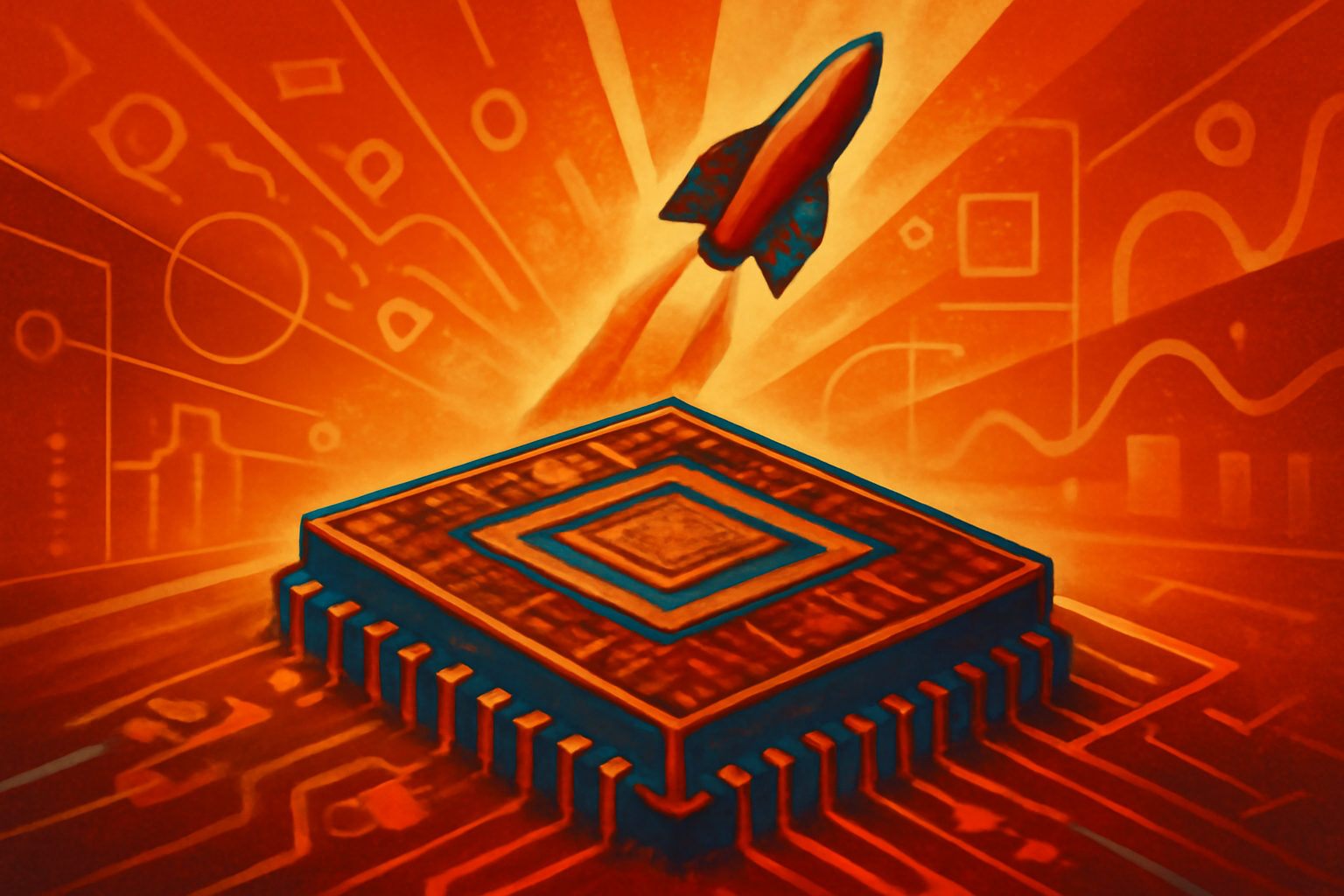
A glowing radiation-hardened AI microchip floats in space with a distant planet Mars in the background.
Photo: Avantgarde News
NASA began testing a new radiation-hardened computer chip designed for autonomous deep space missions [1]. This processor integrates artificial intelligence to allow spacecraft to operate independently without constant contact with Earth [1]. The technology supports upcoming missions to the Moon and Mars by processing scientific data in real time [1].
The new chip offers performance levels hundreds of times greater than current spaceflight hardware [1]. This speed allows for faster decision-making during complex orbital maneuvers or surface operations [1]. By reducing the need for ground-based processing, NASA aims to improve mission efficiency across the solar system [1].
Editorial notes
Transparency note
AI assisted drafting. Human edited and reviewed.
- AI assisted
- Yes
- Human review
- Yes
- Last updated
Risk assessment
The report relies on a single source domain, which limits factual cross-verification.
Sources
Related stories
View all

Topics
About the author
Avantgarde News Desk covers breakthrough in autonomous space computing and editorial analysis for Avantgarde News.