
Real-Time Coordination Boosts Logistics Efficiency
MIT and Symbotic AI Speeds Up Warehouse Robots
A new deep reinforcement learning framework boosts robot throughput by 25 percent in crowded environments.
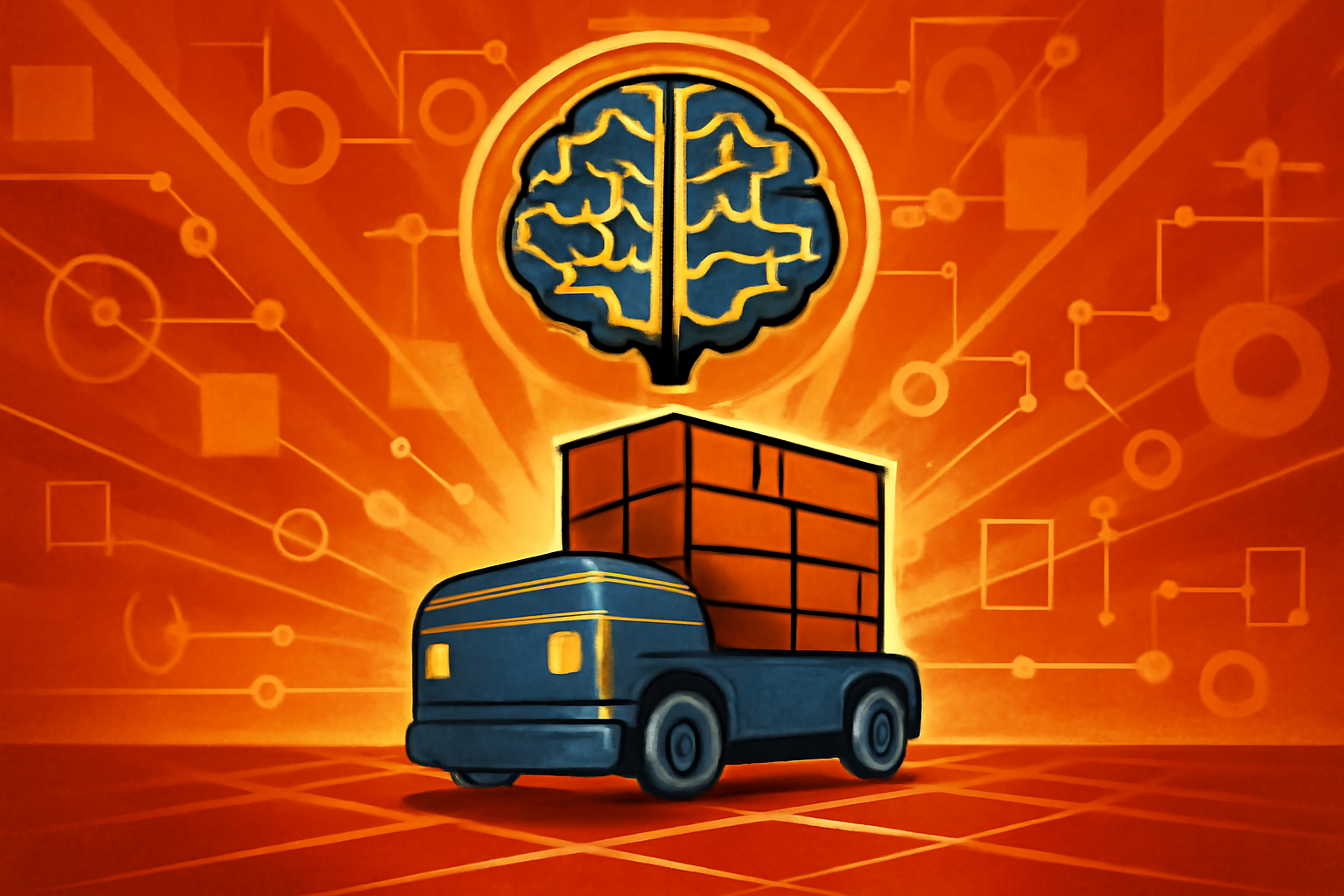
Several small autonomous robots navigate a modern warehouse floor. Digital blue paths illustrate the AI-driven traffic coordination system designed by MIT and Symbotic.
Photo: Avantgarde News
Researchers from MIT and the automation company Symbotic have created a new hybrid AI framework to manage industrial logistics. This system uses deep reinforcement learning to coordinate the movements of hundreds of autonomous warehouse robots simultaneously [1]. By predicting congestion before it happens, the technology allows robots to reroute in real-time [2]. Initial tests showed the coordination system achieved a 25 percent increase in robot throughput [1]. This efficiency gain is possible because the AI identifies potential bottlenecks and adjusts paths dynamically [2]. The collaboration aims to streamline operations in large-scale fulfillment centers where high-density robot traffic often leads to delays [1].
Editorial notes
Transparency note
Drafted with LLM; human-edited
- AI assisted
- Yes
- Human review
- Yes
- Last updated
Risk assessment
The report relies on two independent sources, falling below the recommended threshold of three independent domains.
Sources
Related stories
View all


Topics
About the author
Avantgarde News Desk covers real-time coordination boosts logistics efficiency and editorial analysis for Avantgarde News.