
Biological Neural Networks and Drug Discovery
Brain Organoids Power New Biocomputing Breakthroughs
Lab-grown human brain cells linked to electrodes offer energy-efficient alternatives to traditional silicon AI.
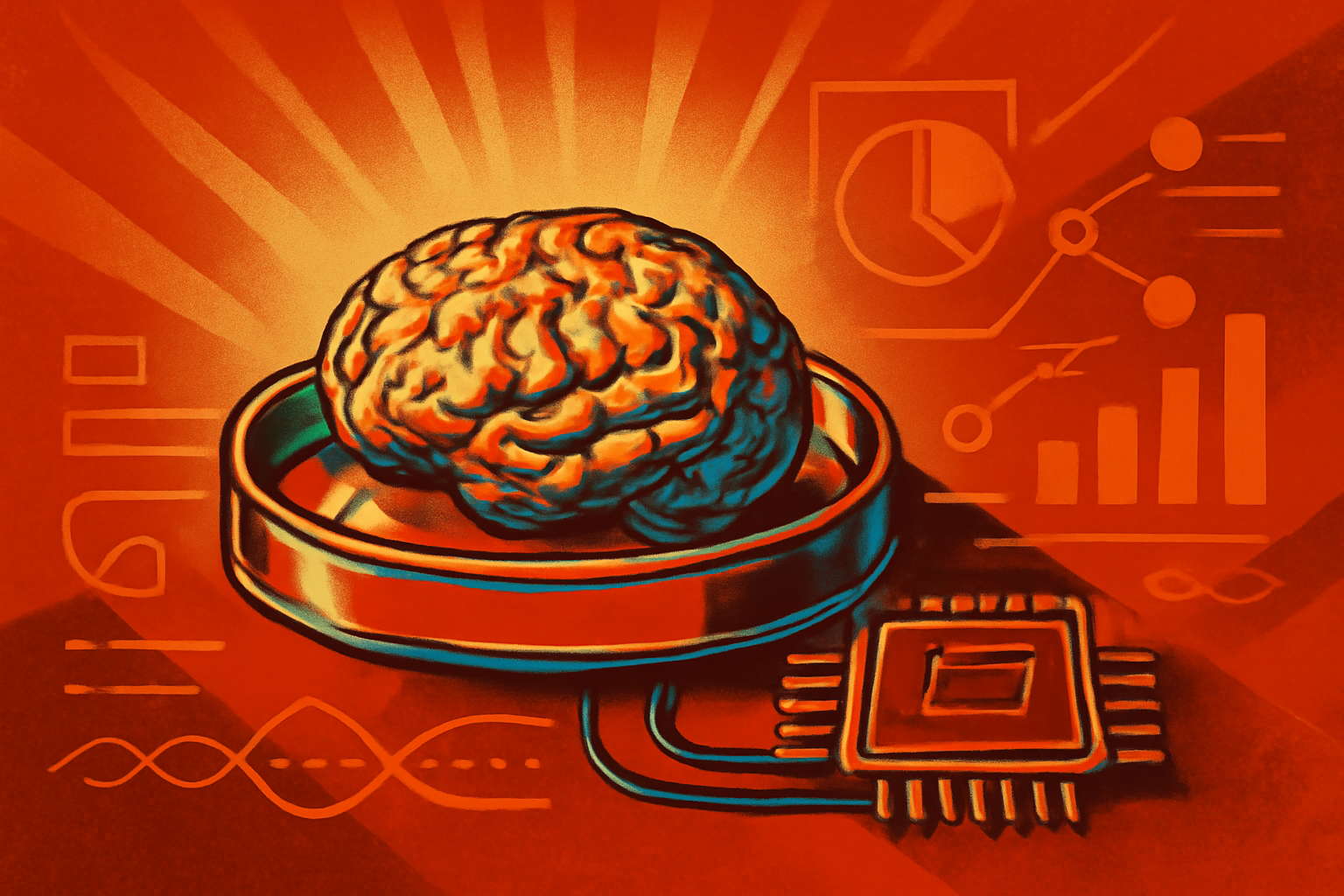
A laboratory view of human brain organoids attached to a grid of micro-electrodes for biocomputing research.
Photo: Avantgarde News
JMIR Publications recently released an investigation into the growing field of biocomputing, where biotech firms connect human brain cell organoids to electrodes [1][2]. These biological systems serve as computing units that can process information with significantly lower energy consumption than traditional silicon-based neural networks [1][3].
Researchers found that these organoids can learn from chaotic data more effectively than standard AI models [1]. This capability opens a new frontier for neuromorphic engineering and the development of advanced computing architectures [2][3].
Beyond computing, this technology offers significant potential for drug discovery [1]. By simulating biological responses in a controlled environment, scientists can study disease progression and test treatments more accurately [2].
Editorial notes
Transparency note
AI assisted drafting. Human edited and reviewed.
- AI assisted
- Yes
- Human review
- Yes
- Last updated
Risk assessment
Reviewed for sourcing quality and editorial consistency.
Sources
Related stories
View all


Topics
About the author
Avantgarde News Desk covers biological neural networks and drug discovery and editorial analysis for Avantgarde News.