
Exploring New Radio Frequencies for Technosignatures
ALMA Telescope Data Powers First High-Frequency SETI Survey
University of Manchester researchers use AI to scan millions of stars for alien technosignatures at new radio channels.
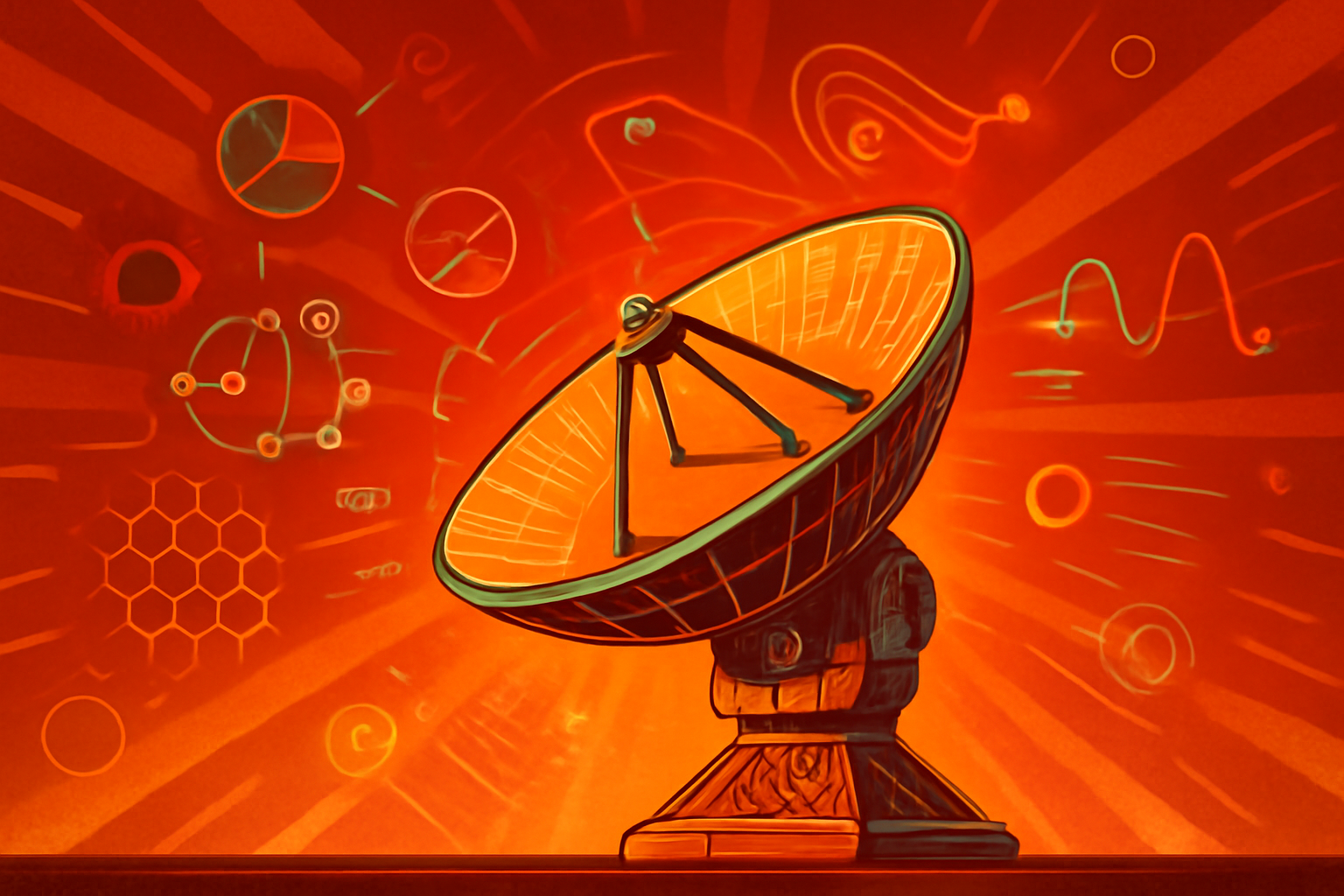
A group of large satellite dishes from the ALMA telescope array in a high-altitude desert setting under a starry sky, with stylized digital data waves representing radio frequency analysis.
Photo: Avantgarde News
Researchers from the University of Manchester have completed the first Search for Extraterrestrial Intelligence (SETI) survey using the Atacama Large Millimeter/submillimeter Array (ALMA) [1]. The study analyzed millions of stars for narrowband signals that could indicate technosignatures from advanced civilizations [1]. This search is significant because it explores higher radio frequencies beyond the traditional "water hole" spectrum usually monitored by astronomers [2].
By employing artificial intelligence, the team scanned massive datasets to detect patterns that suggest artificial origins [1]. Scientists believe that alien signals may be hiding in these unexplored high-radio channels [3]. While the initial survey did not confirm any signals, it successfully demonstrates ALMA's capability to search for complex communication patterns in deep space [2].
Editorial notes
Transparency note
AI assisted drafting. Human edited and reviewed.
- AI assisted
- Yes
- Human review
- Yes
- Last updated
Risk assessment
Reviewed for sourcing quality and editorial consistency.
Sources
- 1.↗
sciencedaily.com
https://www.sciencedaily.com/releases/2026/07/260726015239.htm
- 2.↗
universetoday.com
https://www.universetoday.com/articles/alien-signals-may-hide-in-unexplored-high-radio-frequencies
- 3.↗
astrobiology.com
https://astrobiology.com/2026/07/25/could-alien-signals-be-hiding-on-a-different-radio-channel/
Related stories
View all


Topics
About the author
Avantgarde News Desk covers exploring new radio frequencies for technosignatures and editorial analysis for Avantgarde News.