
New Technology Bridges Ancient History and AI
AI Unlocks Text in Charred Herculaneum Scroll
Researchers use high-energy X-rays and machine learning to read ancient Greek text hidden since 79 AD.
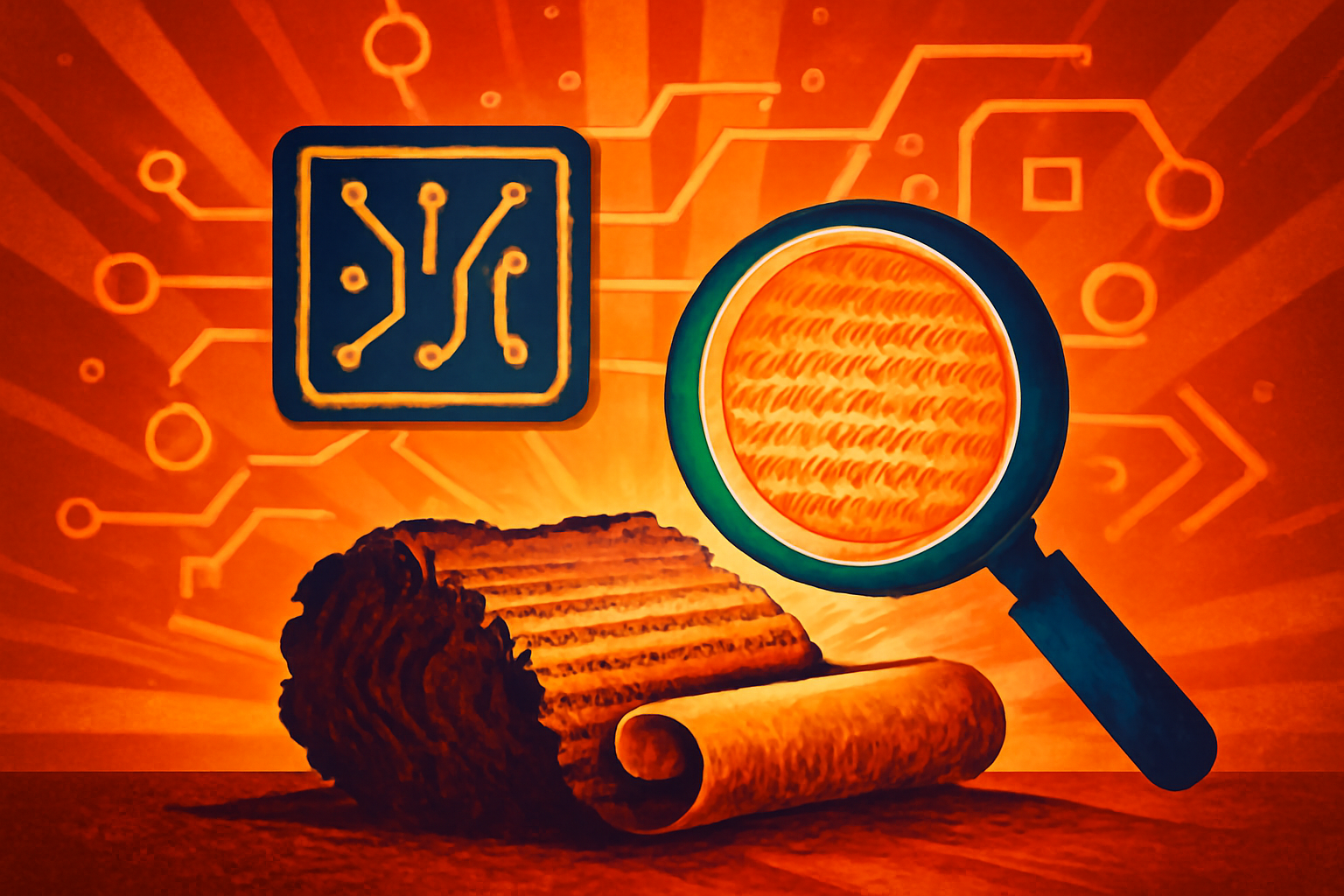
A carbonized ancient scroll inside a high-tech scanner with a computer monitor in the background showing digital reconstructions of ancient Greek text.
Photo: Avantgarde News
Researchers achieved a major breakthrough by reading sections of the Herculaneum scrolls without unrolling them [1]. The team used high-energy X-rays and artificial intelligence to detect dense ink on charred papyrus fibers [1]. This digital process revealed ancient Greek text from a document known as scroll PHerc. 172 [1].
The scrolls have remained unreadable since the eruption of Mount Vesuvius in 79 AD [1]. Past attempts to open the carbonized documents often caused them to crumble. This AI-driven approach protects the fragile artifacts while uncovering their long-lost contents for the first time in centuries [1].
Editorial notes
Transparency note
AI assisted drafting. Human edited and reviewed.
- AI assisted
- Yes
- Human review
- Yes
- Last updated
Risk assessment
The story relies on a single source domain (Daily Galaxy), which falls below the recommended threshold of three independent domains for high-confidence reporting.
Sources
Related stories
View all

Topics
About the author
Avantgarde News Desk covers new technology bridges ancient history and ai and editorial analysis for Avantgarde News.