
Advancing Therapeutic Material Development
AI Speeds Development of Controlled-Release Drug Patches
Brown University researchers use physics-informed neural networks to cut laboratory trials by 94 percent.
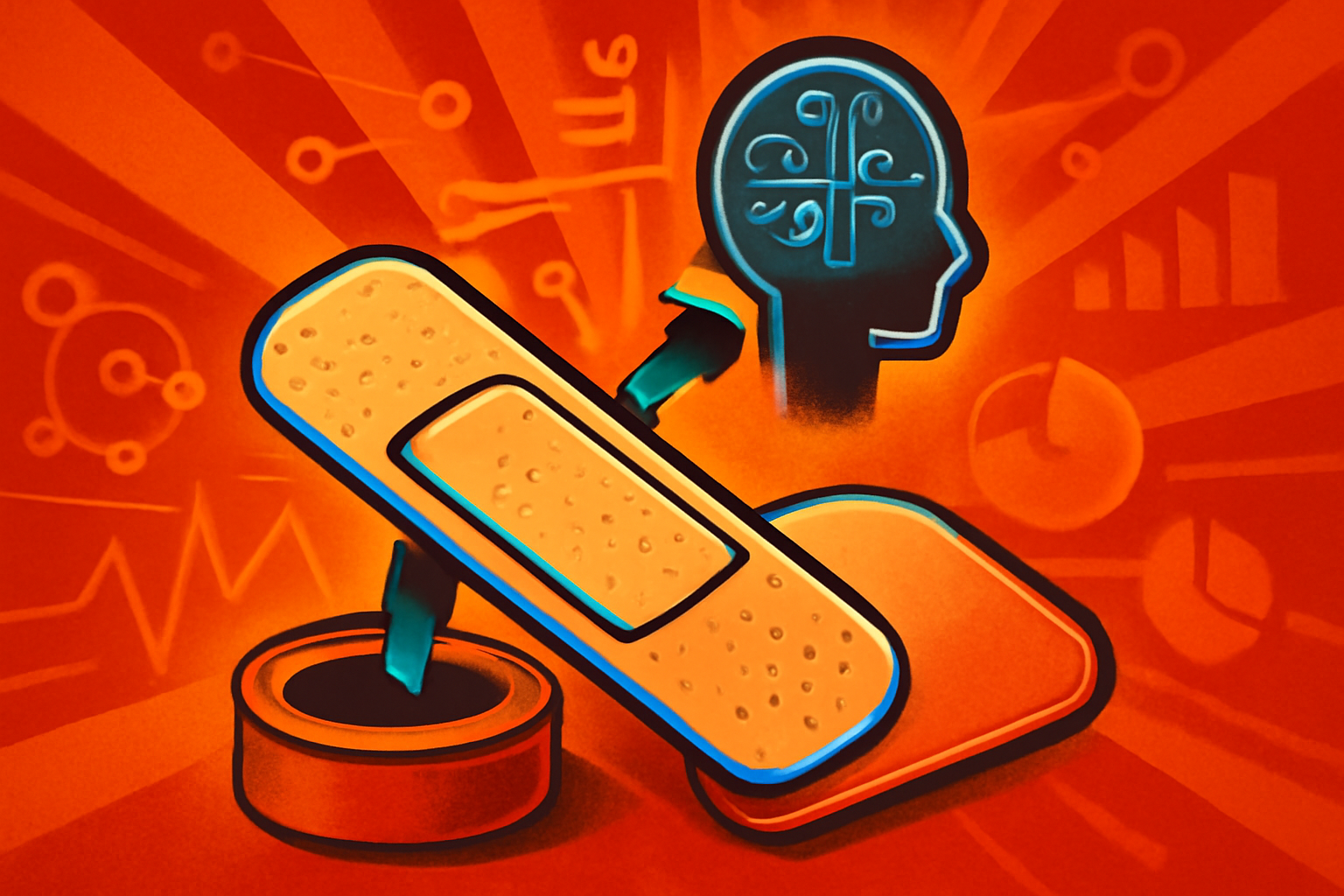
A medical drug patch on a white surface with a computer monitor showing AI neural network diagrams and physics formulas in the background.
Photo: Avantgarde News
Researchers at Brown University developed a physics-informed neural network to predict drug-release rates from medical patches [1]. By embedding physical laws like Fick’s Law of Diffusion, the AI forecasts how medication enters the body [1][2]. This approach allows for accurate predictions even when experimental data is limited [1].
The team reports that this new method reduces the need for traditional laboratory trials by 94% [1][2]. Such a significant decrease in testing could revolutionize the speed of therapeutic material development [1]. Researchers aim to streamline the process for creating controlled-release bandages using these simulations [1][2].
Traditional methods often require extensive, time-consuming trials to ensure safe dosing [2]. By integrating physics directly into the AI model, developers can bypass many of these manual steps [1]. This innovation marks a major shift in how pharmaceutical companies might design future drug delivery systems [2].
Editorial notes
Transparency note
AI assisted drafting. Human edited and reviewed.
- AI assisted
- Yes
- Human review
- Yes
- Last updated
Risk assessment
The source list contains only two independent domains, failing the recommended threshold of three.
Sources
Related stories
View all


Topics
About the author
Avantgarde News Desk covers advancing therapeutic material development and editorial analysis for Avantgarde News.