
Multi-Agent Collaboration Accelerates Drug Discovery
AI Scientists Design New Nanobodies in Stanford Virtual Lab
A multi-agent AI system successfully created 92 candidate treatments for evolving COVID-19 variants.
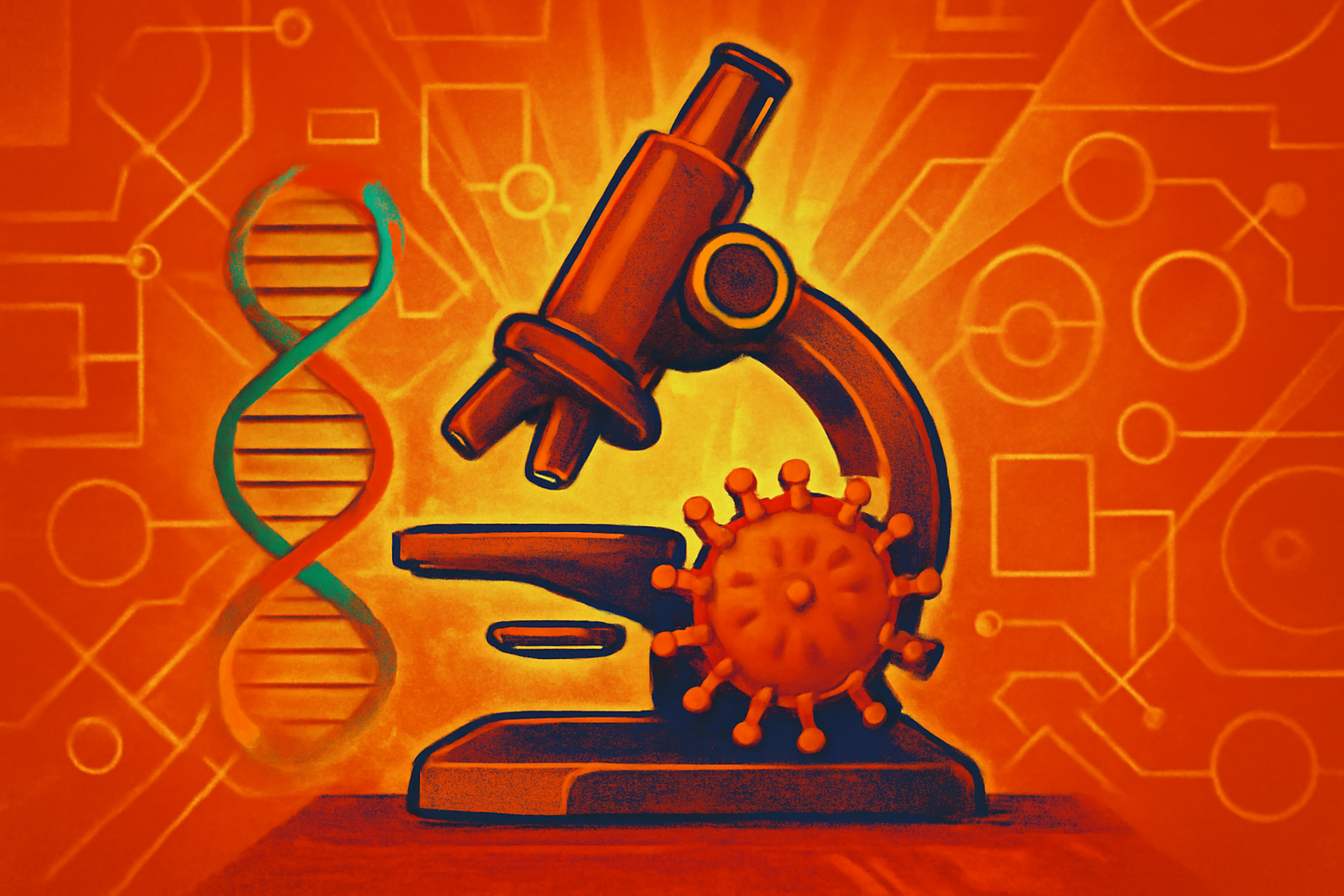
A digital illustration showing glowing AI silhouettes collaborating around a 3D molecular model of a virus in a high-tech virtual laboratory.
Photo: Avantgarde News
Stanford University researchers have developed "Virtual Lab," a multi-agent artificial intelligence system designed to mimic a team of scientists. This autonomous system allows AI agents to collaborate on complex therapeutic discovery tasks [1]. The project marks a shift toward digital research teams that can automate drug development [1].
The Virtual Lab successfully designed 92 candidate nanobodies targeting evolving COVID-19 variants [1]. During experimental testing, several of these AI-generated candidates showed promising results [1]. This breakthrough could significantly reduce the time needed to develop treatments for rapidly changing viruses [1].
Editorial notes
Transparency note
AI assisted drafting. Human edited and reviewed.
- AI assisted
- Yes
- Human review
- Yes
- Last updated
Risk assessment
The story relies on a single source domain (The Stanford Daily), which fails the recommendation for three independent domains.
Sources
- 1.↗
The Stanford Daily
Stanford Researchers Develop AI Scientists for Therapeutic Discovery
A Stanford-led research team has created the 'Virtual Lab,' a multi-agent system where artificial intelligence agents collaborate as a team of scientists. The system successfully designed 92 candidate nanobodies targeting evolving COVID-19 variants, several of which showed promising results in experimental testing.
Back to reference
Related stories
View all
Topics
About the author
Avantgarde News Desk covers multi-agent collaboration accelerates drug discovery and editorial analysis for Avantgarde News.