
Impact of Scientific Embodied Agents
AI Robots Automate Complex Laboratory Experiments
Ginkgo Bioworks and Brookhaven National Laboratory deploy AI agents to handle gene editing and data logging.
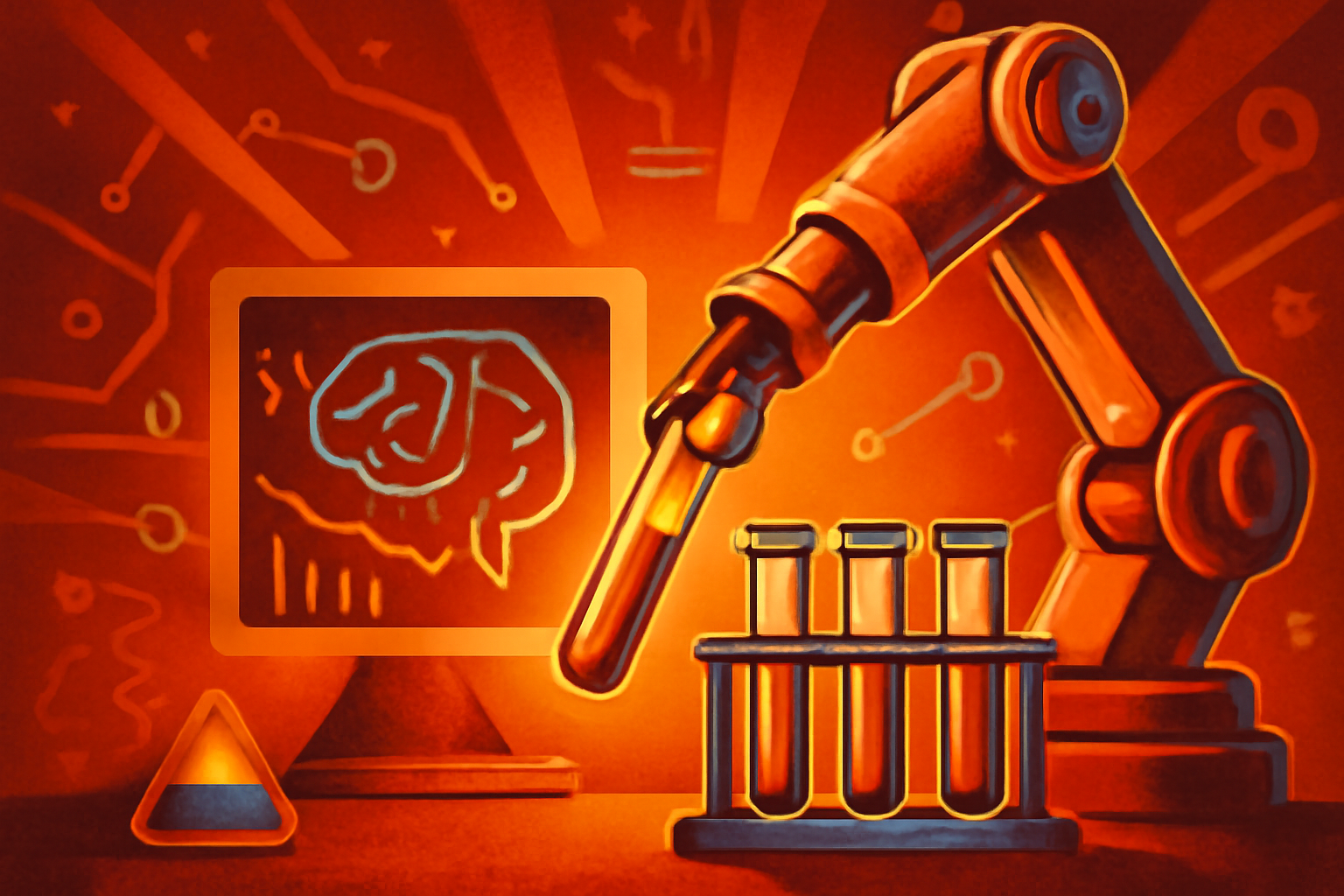
A robotic arm performs a chemistry experiment in a modern laboratory, handling test tubes while an AI interface monitors the data on a background screen.
Photo: Avantgarde News
Scientists are training AI-powered robots to autonomously conduct laboratory experiments to speed up scientific discovery [1][2]. These systems, known as scientific embodied agents, are capable of writing lab notebook entries and performing tasks like gene editing [1][3]. Researchers at Ginkgo Bioworks and Brookhaven National Laboratory are currently deploying these systems to reduce human labor [1][2].
The AI agents handle complex molecule testing and automate repetitive manual processes within the lab environment [2][3]. This technological shift aims to increase the efficiency of research across multiple scientific disciplines [3]. By utilizing these robots, institutions can ensure higher precision while allowing researchers to focus on data analysis [1].
Editorial notes
Transparency note
AI assisted drafting. Human edited and reviewed.
- AI assisted
- Yes
- Human review
- Yes
- Last updated
Risk assessment
Reviewed for sourcing quality and editorial consistency.
Sources
Related stories
View all


Topics
About the author
Avantgarde News Desk covers impact of scientific embodied agents and editorial analysis for Avantgarde News.