
Optimizing Research Workflows
AI-Powered Autonomous Labs Speed Scientific Discovery
Brookhaven and Ginkgo Bioworks transition research tasks to robots to automate complex laboratory workflows.
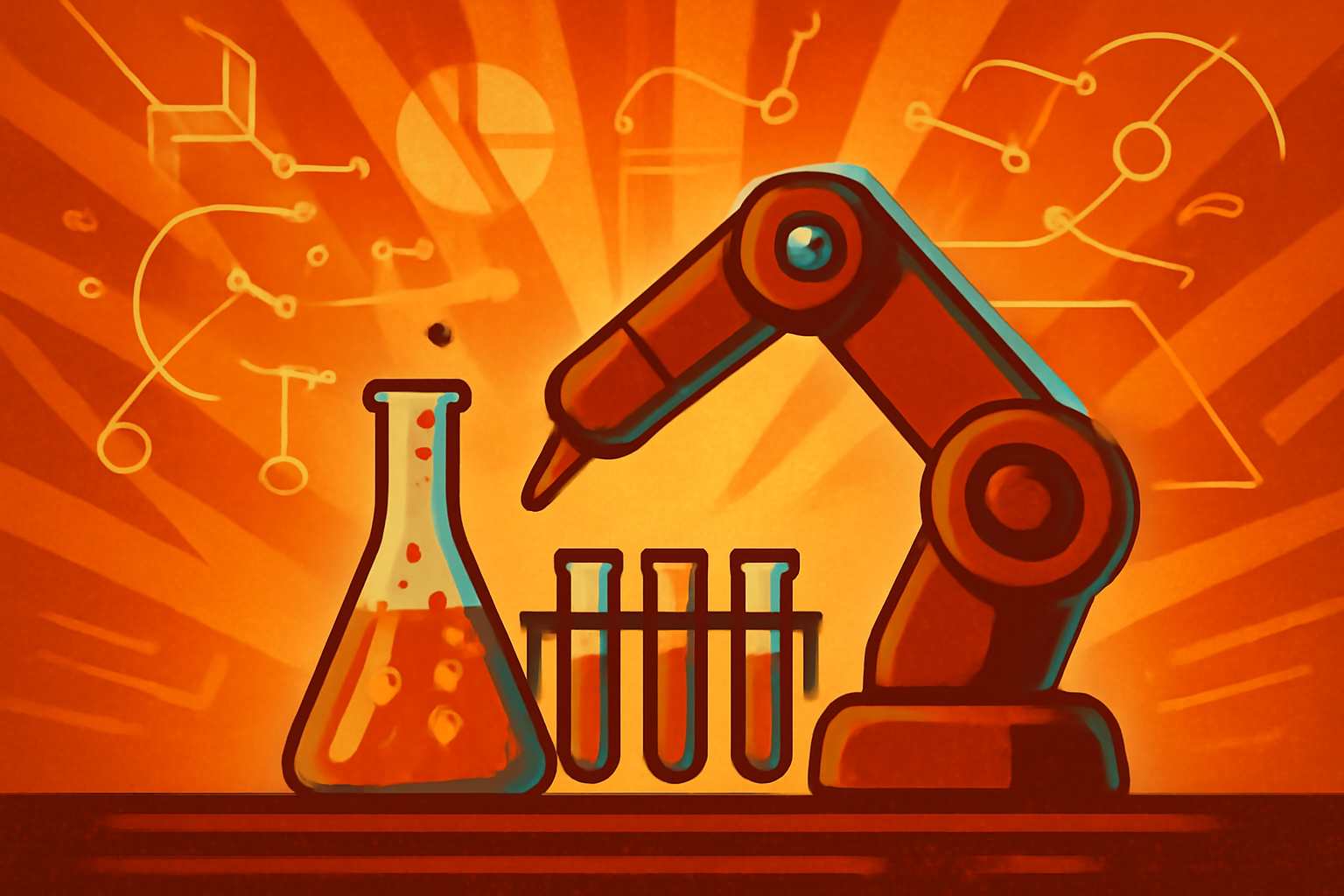
A clean, modern laboratory featuring robotic arms and automated equipment performing scientific experiments under soft blue lighting.
Photo: Avantgarde News
Scientists are shifting research tasks to autonomous laboratories powered by artificial intelligence [1]. These systems allow researchers to outsource time-consuming experiments to robots, aiming to accelerate discovery [1]. Major institutions including Brookhaven National Laboratory and Ginkgo Bioworks are currently leading these efforts [1].
These embodied AI systems are trained to perform complex experiments and optimize laboratory workflows [1][2]. By automating laborious tasks, the labs can run continuously without human fatigue [2]. This transition represents a significant shift in how scientific data is gathered and processed [3].
Editorial notes
Transparency note
AI assisted drafting. Human edited and reviewed.
- AI assisted
- Yes
- Human review
- Yes
- Last updated
Risk assessment
Reviewed for sourcing quality and editorial consistency.
Sources
- 1.↗
delawarepublic.org
https://www.delawarepublic.org/npr-headlines/2026-06-05/most-k-12-teachers-say-ais-impact-on-education-will-eclipse-the-internet-or-computers
- 2.↗
wfae.org
https://www.wfae.org/science-technology
- 3.↗
hawaiipublicradio.org
https://www.hawaiipublicradio.org/national-international/2026-06-05/the-world-cup-vs-bugs-germs-and-heat-heres-the-game-plan
Related stories
View all


Topics
About the author
Avantgarde News Desk covers optimizing research workflows and editorial analysis for Avantgarde News.