
Breaking the Speed Limit of Molecular Imaging
AI Model Rebuilds Molecules From Exploding Fragments
Argonne National Laboratory unveils MOLEXA, a generative AI tool for real-time 3D molecular imaging.
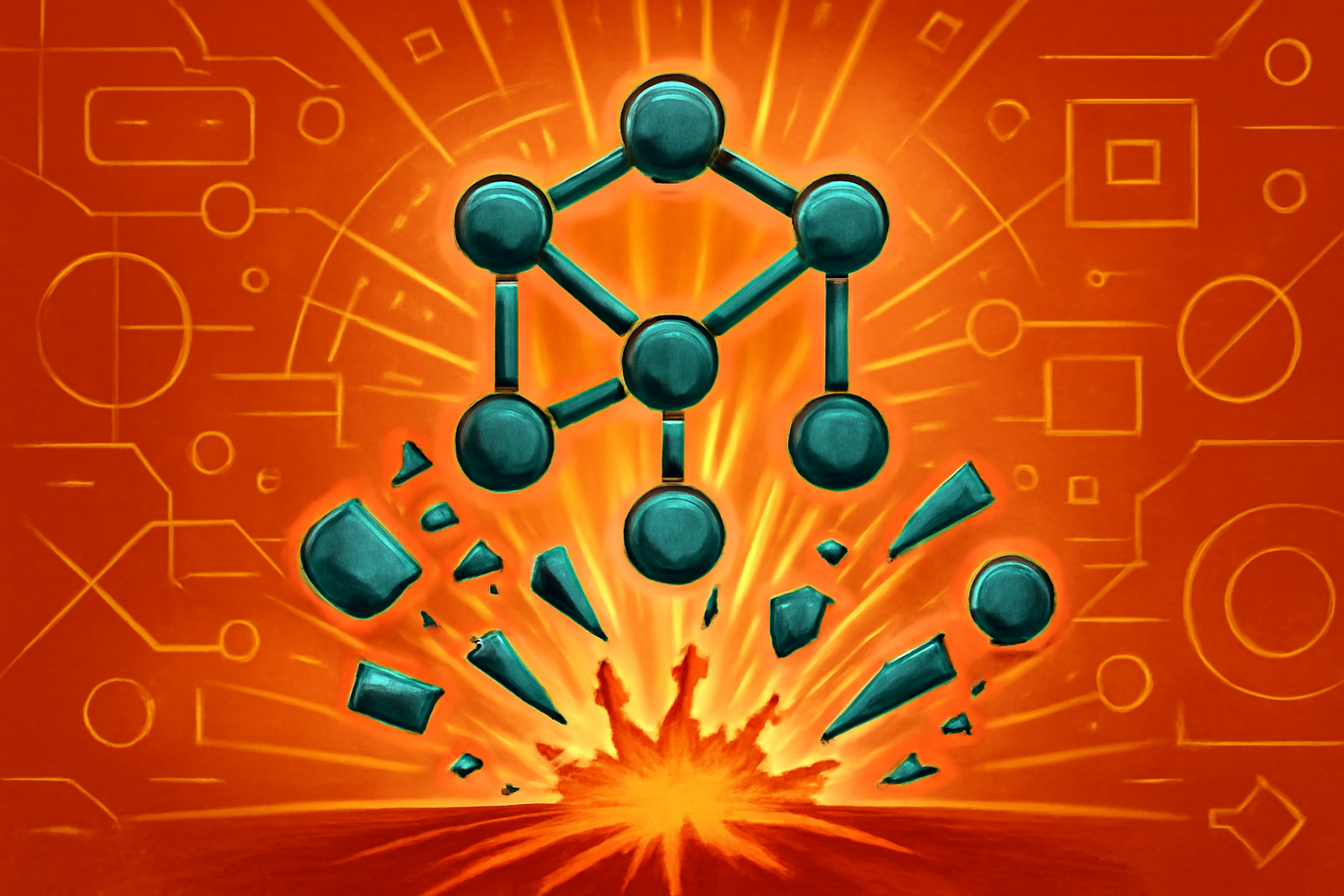
A digital illustration of a 3D molecule being assembled from glowing fragments by blue and purple light patterns, representing AI reconstruction.
Photo: Avantgarde News
Researchers at Argonne National Laboratory and partner institutions created MOLEXA, a generative AI model designed to reconstruct 3D molecular structures [1]. The tool uses ion momentum data captured during X-ray-induced Coulomb explosion imaging [1][2]. This process allows scientists to observe chemical reactions at a molecular scale in real time [1].
MOLEXA bypasses traditional computational bottlenecks by processing fragments from exploding molecules [2]. This breakthrough provides a faster way to visualize complex chemical shifts as they occur [1]. The development marks a significant step forward in the field of molecular imaging and physical chemistry [1][2].
Editorial notes
Transparency note
AI assisted drafting. Human edited and reviewed.
- AI assisted
- Yes
- Human review
- Yes
- Last updated
Risk assessment
The sourcing provided includes only two independent domains, failing the internal requirement of three domains for standard verification.
Sources
Related stories
View all


Topics
About the author
Avantgarde News Desk covers breaking the speed limit of molecular imaging and editorial analysis for Avantgarde News.