
Advancing Crop Performance Through Deep Learning
AI Model Predicts DNA-Binding to Crack Plant Gene Code
Researchers at Forschungszentrum Jülich and IPK Leibniz Institute use deep learning to map crop genetic variation.
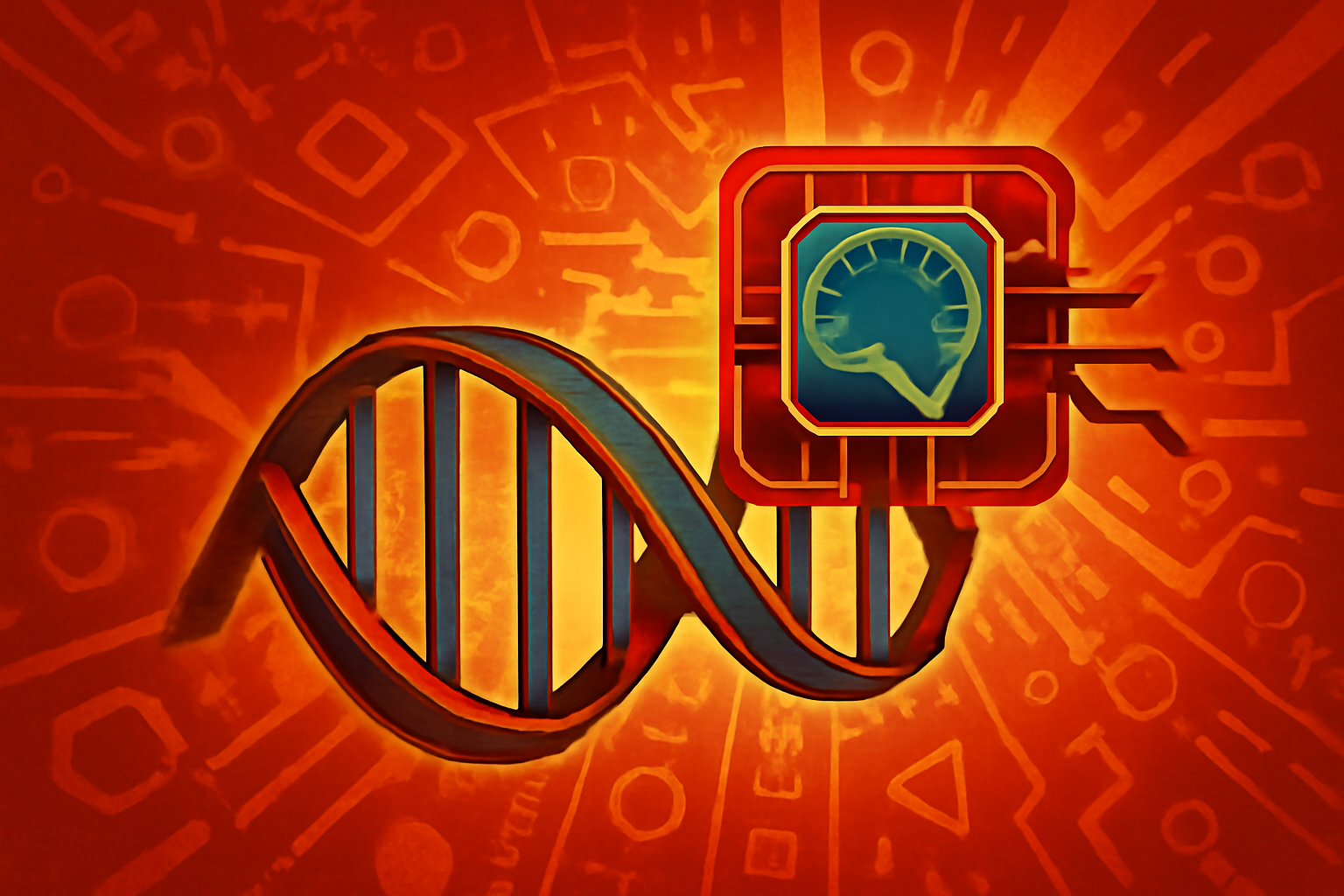
A digital illustration showing a DNA strand with glowing connections representing an AI neural network, overlaid on a background of green leaves.
Photo: Avantgarde News
Researchers from Forschungszentrum Jülich and the IPK Leibniz Institute have developed a deep learning model to predict where regulatory proteins dock onto plant DNA [1]. This breakthrough provides new insights into how genetic variation influences crop performance and development [1]. By mapping these interactions, the AI identifies specific locations where transcription factors bind to the genome [2].
The study demonstrates that genome-wide modeling successfully captures regulatory variants associated with phenotypic traits [2]. This tool allows scientists to better understand the complex mechanisms controlling gene expression in plants [3]. Such advancements in agricultural technology could lead to the development of more resilient and high-yielding crop varieties in the future [1][3].
Editorial notes
Transparency note
AI assisted drafting. Human edited and reviewed.
- AI assisted
- Yes
- Human review
- Yes
- Last updated
Risk assessment
Reviewed for sourcing quality and editorial consistency.
Sources
- 1.↗
miragenews.com
https://www.miragenews.com/ai-cracks-gene-code-insights-into-plant-control-1693196/
- 2.↗
researchgate.net
https://www.researchgate.net/publication/405877952_Genome-wide_modelling_of_plant_transcription_factor_binding_captures_regulatory_variants_associated_with_phenotypic_traits
- 3.↗
helmholtz-munich.de
https://www.helmholtz-munich.de/en/newsroom
Related stories
View all
Topics
About the author
Avantgarde News Desk covers advancing crop performance through deep learning and editorial analysis for Avantgarde News.