
Advancing Multi-Omics Data Interpretation
AI Model Maps Gene Relationships in Human Cells
Researchers at Mount Sinai developed a new tool to predict how genes function together in biological contexts.
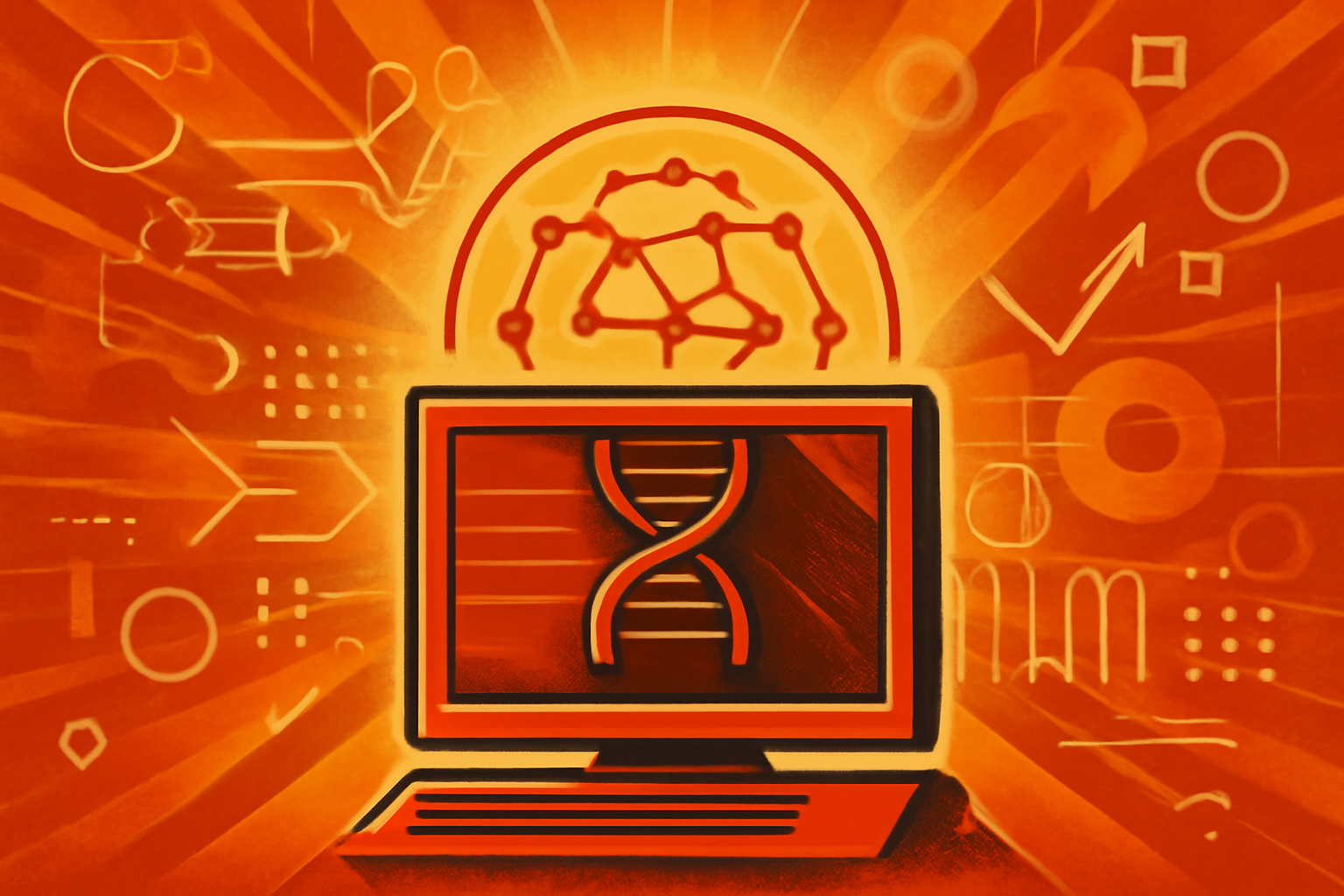
Digital art showing glowing DNA strands connected by a complex network of lines and nodes, representing an AI model mapping gene-gene relationships inside a human cell.
Photo: Avantgarde News
Researchers at the Icahn School of Medicine at Mount Sinai developed a gene set foundation model (GSFM) to study cellular behavior [1]. This artificial intelligence tool learns how genes function together across different biological contexts [2]. It maps complex relationships inside human cells to improve the interpretation of multi-omics datasets [1][3].
The GSFM can predict gene-function relationships before scientists confirm them through laboratory experiments [1][2]. This capability allows researchers to identify critical interactions earlier in the discovery process [3]. The model provides a new way to understand how genes collaborate to maintain health or drive disease [2].
Editorial notes
Transparency note
AI assisted drafting. Human edited and reviewed.
- AI assisted
- Yes
- Human review
- Yes
- Last updated
Risk assessment
Reviewed for sourcing quality and editorial consistency.
Sources
- 1.↗
mountsinai.org
https://www.mountsinai.org/about/newsroom/2026/researchers-develop-ai-model-that-maps-how-genes-work-together-in-human-cells
- 2.↗
news-medical.net
https://www.news-medical.net/news/20260521/New-artificial-intelligence-model-maps-how-genes-work-together-inside-cells.aspx
- 3.↗
eurekalert.org
https://www.eurekalert.org/specialtopic/tech/home?page=2
Related stories
View all
Topics
About the author
Avantgarde News Desk covers advancing multi-omics data interpretation and editorial analysis for Avantgarde News.