
Bypassing Traditional Clinical Trial Bottlenecks
AI Drives Revolution in N-of-1 Personalized Medicine
Experts at the 2026 Precision Medicine World Conference highlight AI's role in tailored drug design.
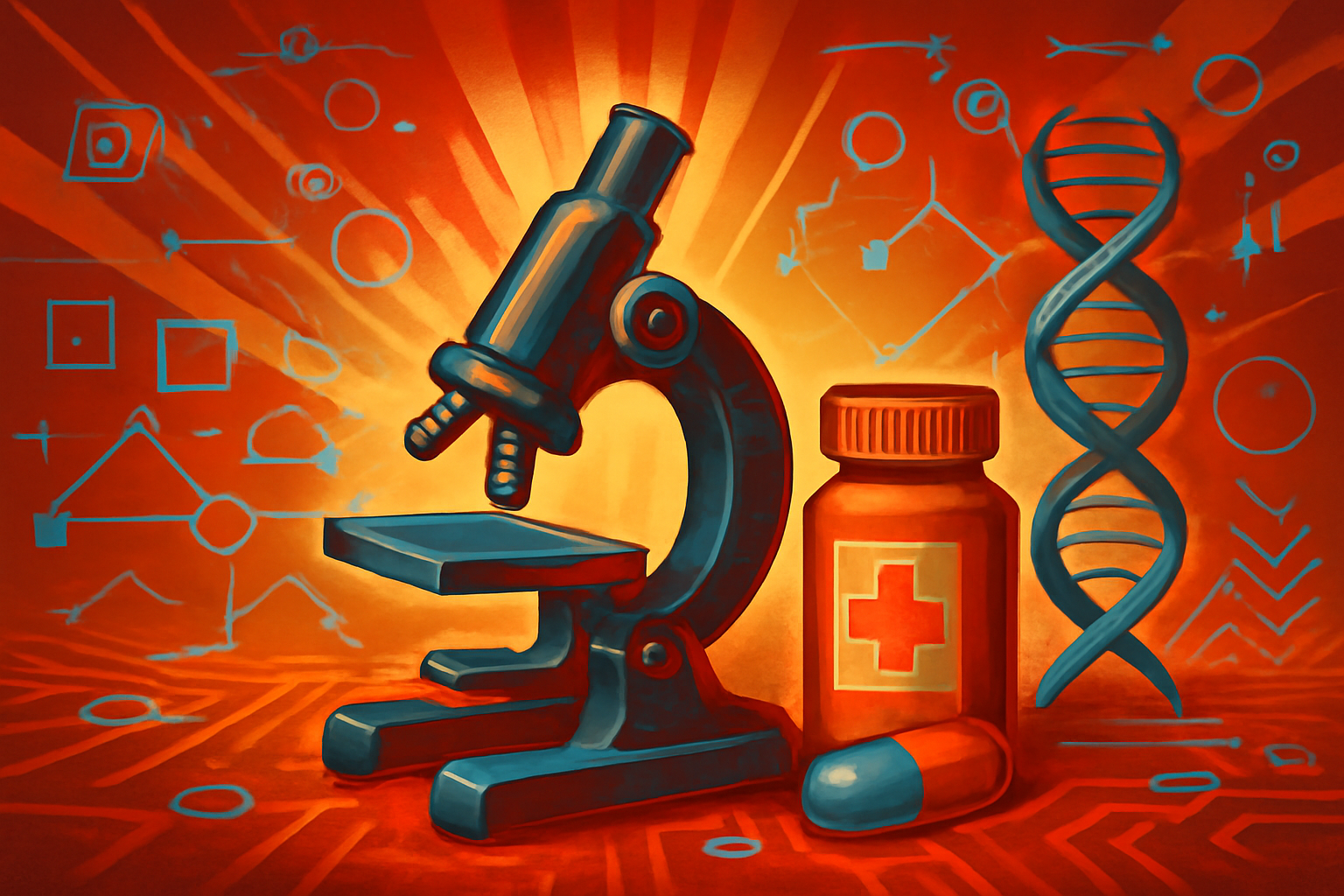
A digital display showing a complex 3D protein structure alongside a glowing DNA strand in a modern medical research facility.
Photo: Avantgarde News
Healthcare leaders at the 2026 Precision Medicine World Conference discussed how generative AI and protein-folding models are enabling the design of "N-of-1" drugs [1]. These medicines are tailored to specific genetic mutations found in individual patients [1]. This approach aims to transform treatments for rare diseases and cancer by targeting unique molecular structures [1]. Venture capitalist Vinod Khosla and other industry leaders emphasized that AI can model specific molecular binding for unique cases [1]. By doing so, AI tools may bypass traditional bottlenecks found in standard clinical trials [1]. This shift marks a new era in precision medicine where drug development focuses on the single patient [1].
Editorial notes
Transparency note
Drafted with LLM; human-edited
- AI assisted
- Yes
- Human review
- Yes
- Last updated
Risk assessment
Risk level escalated to high because the source list contains only one independent domain, which fails the recommended checklist of at least three sources.
Sources
Related stories
View all

Topics
About the author
Avantgarde News Desk covers bypassing traditional clinical trial bottlenecks and editorial analysis for Avantgarde News.