
Programmable Biology Through Deep Learning
AI Designs RNA Switches for Cellular Logic
TU Darmstadt researchers use deep learning to create synthetic genetic switches that mimic computer functions.
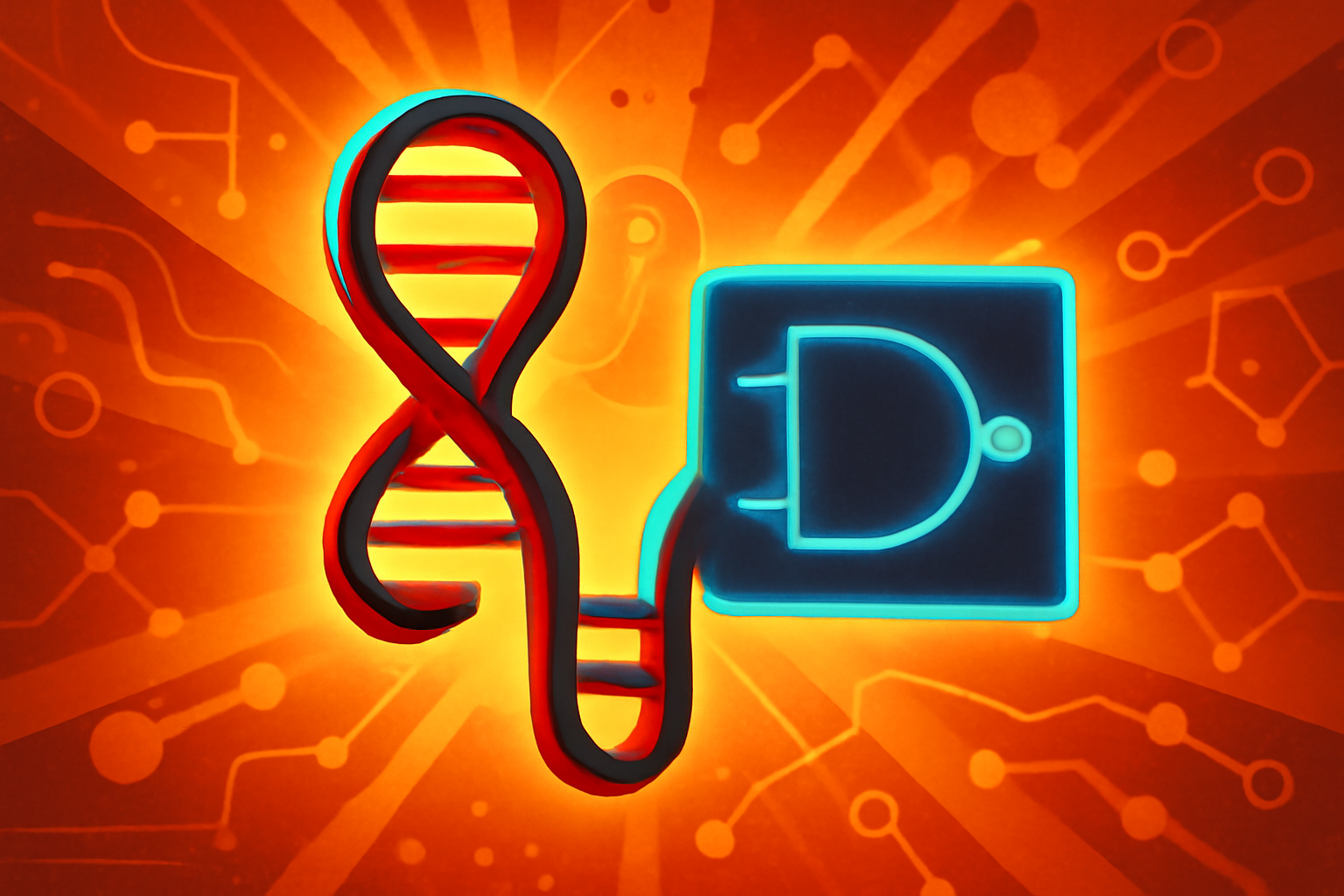
A conceptual 3D render showing an RNA molecule with embedded digital circuit elements, symbolizing AI-designed genetic logic gates.
Photo: Avantgarde News
Researchers at TU Darmstadt have developed synthetic RNA-based genetic switches that mimic computer logic [1][2]. Using deep learning and Bayesian optimization, the team successfully engineered riboswitches to process multiple biochemical signals simultaneously [1]. This allows living cells to perform complex logical functions, including Boolean NAND gates [1][2]. These "smart" cells can now make autonomous decisions based on their molecular environment [2][3]. By treating genetic pathways as digital circuits, the team bridges the gap between computing and molecular biology [1][3]. This AI-driven approach could eventually lead to highly targeted medical treatments and advanced synthetic systems [1].
Editorial notes
Transparency note
Drafted with LLM; human-edited
- AI assisted
- Yes
- Human review
- Yes
- Last updated
Risk assessment
Reviewed for sourcing quality and editorial consistency.
Sources
Related stories
View all


Topics
About the author
Avantgarde News Desk covers programmable biology through deep learning and editorial analysis for Avantgarde News.