
Matching Simulations with Physical Evidence
AI Decodes Rules of Ancient Roman Board Game
Researchers use machine learning and stone wear patterns to solve a 2,000-year-old archaeological mystery.
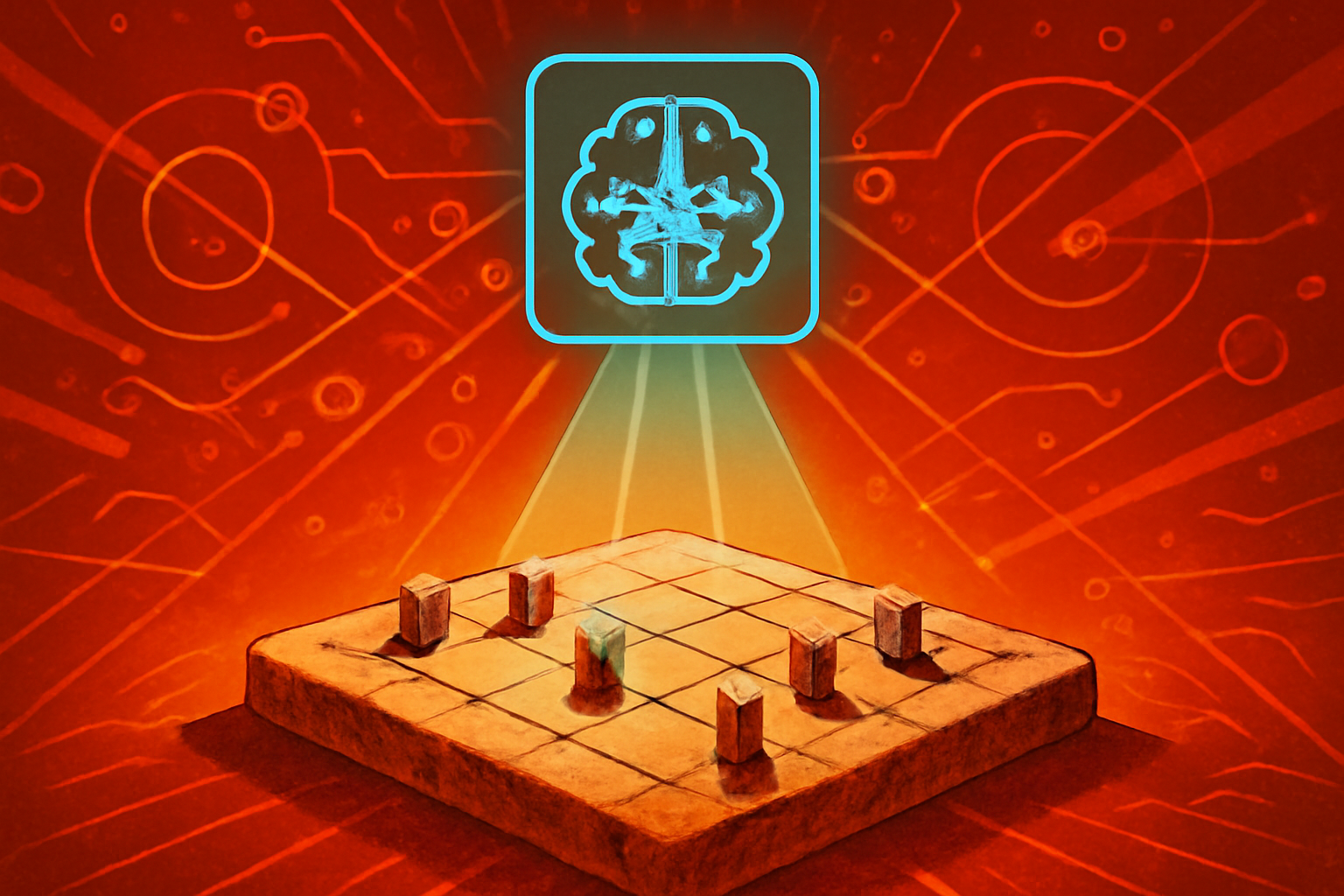
A weathered stone slab from the Roman era featuring circular engravings, with a digital overlay representing artificial intelligence analysis and game simulations.
Photo: Avantgarde News
An international research team has used artificial intelligence to decode the rules of an ancient Roman board game [1]. By simulating millions of potential game variations, the AI successfully identified a "blocking game" strategy used nearly 2,000 years ago [2]. The study combined modern data science with traditional archaeology to explain how these games were once played [3]. Scientists focused on wear patterns found on an engraved stone used as a game board [1]. The AI matched these physical marks against the outcomes of digital simulations to verify the most likely ruleset [2]. This breakthrough offers a new tool for historians to understand the social lives and leisure activities of ancient civilizations [3].
Editorial notes
Transparency note
Drafted with LLM; human-edited
- AI assisted
- Yes
- Human review
- Yes
- Last updated
Risk assessment
Reviewed for sourcing quality and editorial consistency.
Sources
- 1.↗
news.flinders.edu.au
https://news.flinders.edu.au/blog/2026/03/21/ai-sheds-light-on-an-ancient-gaming-mystery/
- 2.↗
thedebrief.org
https://thedebrief.org/nearly-two-thousand-years-after-romans-played-an-ancient-mysterious-board-game-ai-figured-out-the-rules/
- 3.↗
eurekalert.org
https://www.eurekalert.org/news-releases/1120532
Related stories
View all


Topics
About the author
Avantgarde News Desk covers matching simulations with physical evidence and editorial analysis for Avantgarde News.