
Advancing Bioacoustic Research
AI Decodes Birdsong: UC Berkeley Scientist Wins $100,000
Dr. Julie Elie receives the Coller-Dolittle prize for mapping zebra finch vocalizations using advanced bioacoustics.
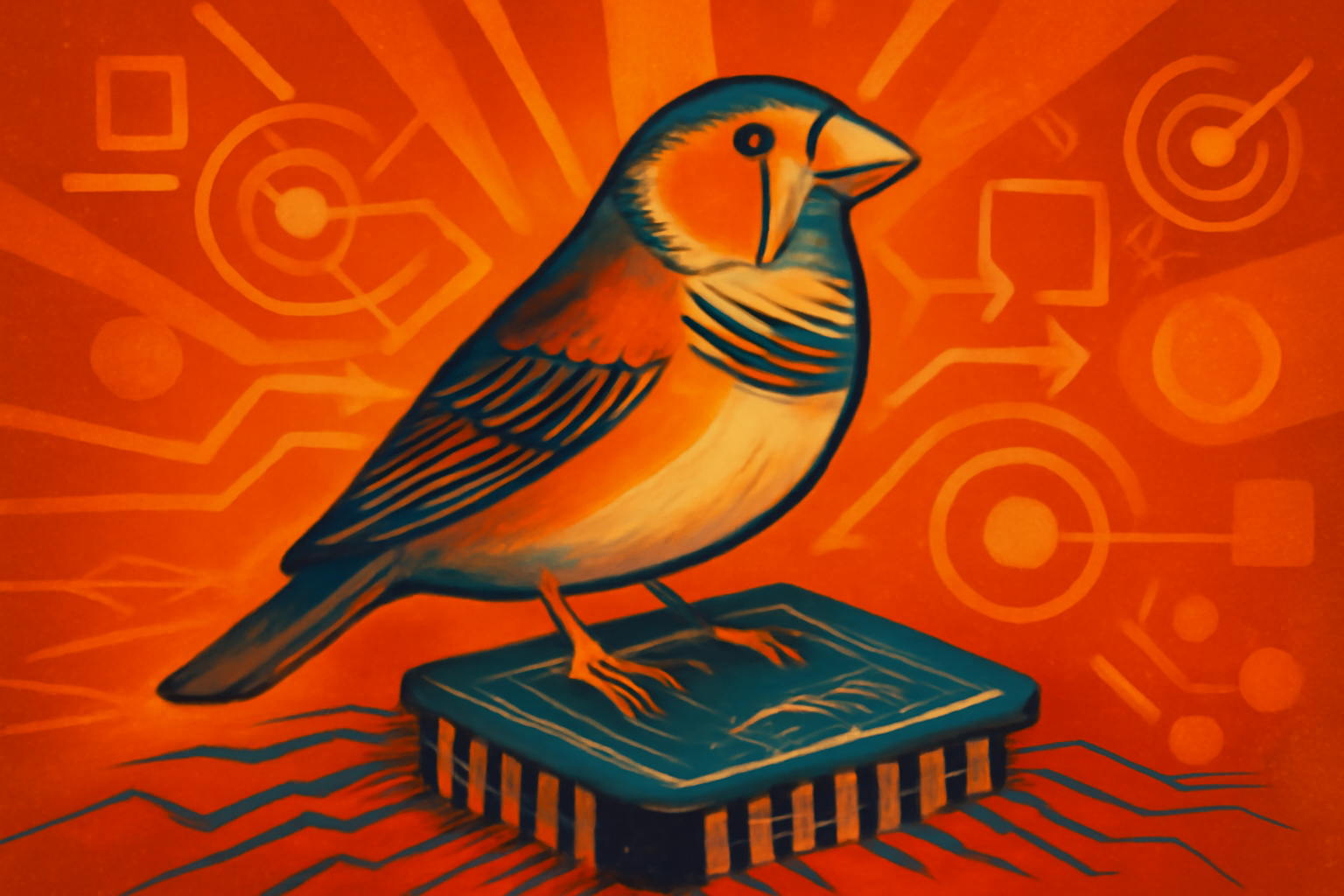
A small zebra finch bird perched on a wooden branch with stylized digital sound frequency waves in the background.
Photo: Avantgarde News
Dr. Julie Elie, a researcher at UC Berkeley, received the 2026 Coller-Dolittle prize on June 26, 2026 [1]. The $100,000 award recognizes her breakthrough in decoding zebra finch communication through advanced technology [1]. This achievement moves science one step closer to understanding complex animal interactions [1].
Using artificial intelligence to analyze vast bioacoustic datasets, Elie identified 11 core calls and unique individual signatures [1]. These findings reveal specific bird activities and help identify individual animals within a population [1]. Such advancements in digital monitoring are increasingly vital for tracking biodiversity across various global ecosystems [2][3].
Editorial notes
Transparency note
AI assisted drafting. Human edited and reviewed.
- AI assisted
- Yes
- Human review
- Yes
- Last updated
Risk assessment
Reviewed for sourcing quality and editorial consistency.
Sources
- 1.↗
The Guardian
UC Berkeley Scientist Wins $100,000 Prize for Decoding Zebra Finch Communication with AI
Dr. Julie Elie was awarded the 2026 Coller-Dolittle prize for her breakthrough in decoding the vocalizations of zebra finches. By using AI to analyze large bioacoustic datasets, she identified 11 core calls and individual signatures that reveal what the birds are doing and who they are.
Back to reference
Related stories
View all


Topics
About the author
Avantgarde News Desk covers advancing bioacoustic research and editorial analysis for Avantgarde News.