
Technological Breakthrough for Classical History
AI Deciphers 2,000-Year-Old Herculaneum Scroll
Researchers use X-ray scans and artificial intelligence to reveal lost Stoic philosophy from carbonized Roman texts.
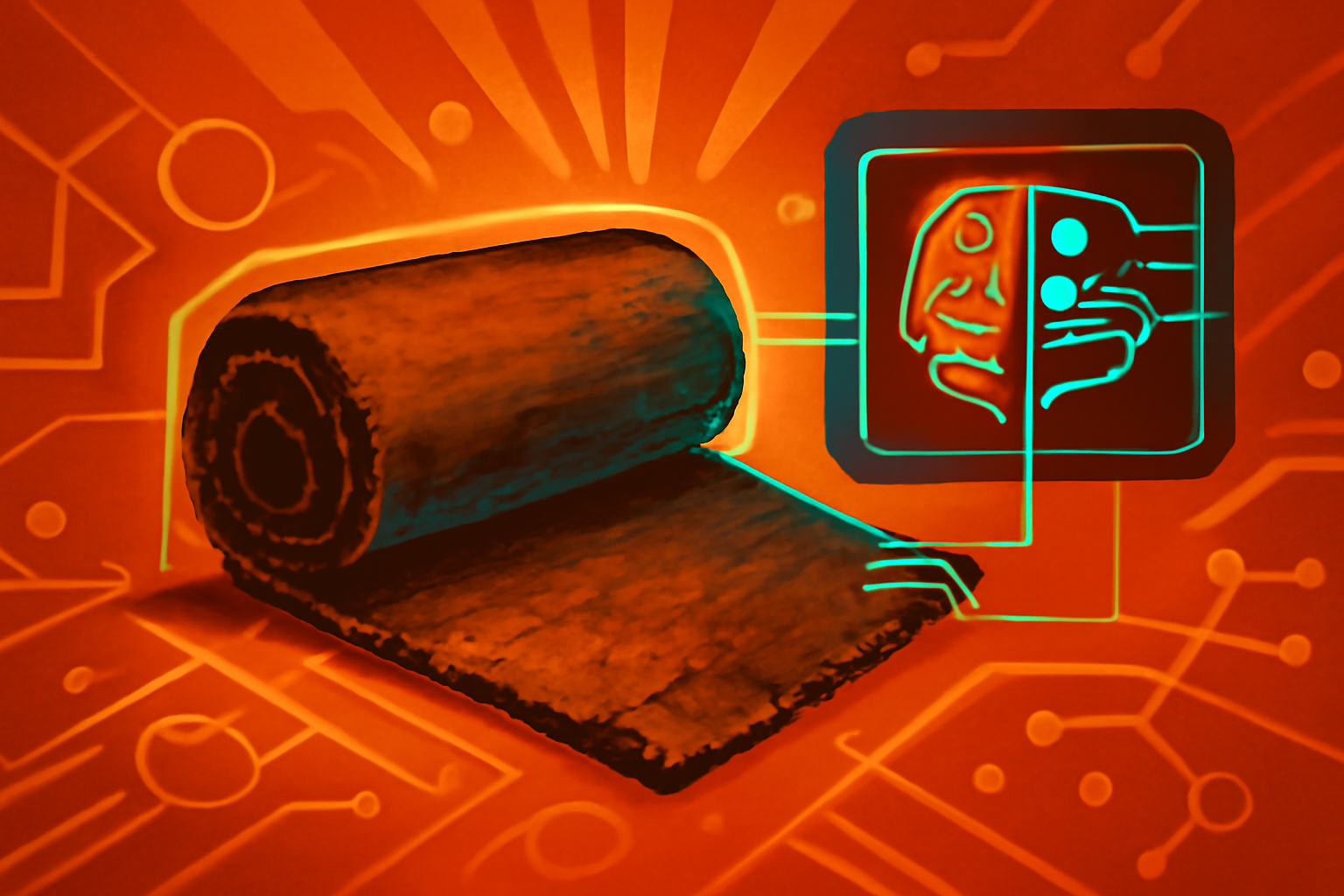
A charred, black ancient Roman scroll sits on a laboratory platform while a blue light scan passes over it, with digital ancient text appearing on a nearby screen.
Photo: Avantgarde News
Researchers from the University of Naples Federico II and the University of Kentucky used artificial intelligence to read a carbonized 2,000-year-old papyrus scroll [1]. The ancient document was burnt during the eruption of Mount Vesuvius and remained too fragile to physically unroll for centuries [3]. By utilizing high-resolution X-ray scans, the team virtually unwrapped the artifact to reveal 20 columns of previously hidden text [1][2].
The decoded writing offers a rare glimpse into Stoic philosophy, specifically exploring themes of ethics, art, and human behavior [1]. This achievement relied on advanced imaging techniques and deep learning models to identify subtle ink marks on the blackened surface [2][3]. Experts suggest this methodology could eventually help unlock hundreds of other damaged scrolls currently stored in Naples [1].
Editorial notes
Transparency note
AI assisted drafting. Human edited and reviewed.
- AI assisted
- Yes
- Human review
- Yes
- Last updated
Risk assessment
Reviewed for sourcing quality and editorial consistency.
Sources
- 1.↗
theguardian.com
https://www.theguardian.com/technology/2026/jun/24/ai-read-papyrus-scroll-burnt-vesuvius-eruption
- 2.↗
diamond.ac.uk
https://www.diamond.ac.uk/Home/News/LatestNews/2026/New-secrets-revealed-from-the-Herculaneum-scrolls.html
- 3.↗
techradar.com
https://www.techradar.com/ai-platforms-assistants/ai-just-helped-researchers-read-a-2-000-year-old-mount-vesuvius-scroll-thats-too-charred-to-ever-be-opened-as-x-ray-images-reveal-ancient-stoic-philosophy
Related stories
View all


Topics
About the author
Avantgarde News Desk covers technological breakthrough for classical history and editorial analysis for Avantgarde News.