
Standardized Data Fuels Scientific Breakthroughs
AI Agents Slash Catalyst Research Time to Minutes
New autonomous tools accelerate the transition from chemical simulations to industrial scale-up.

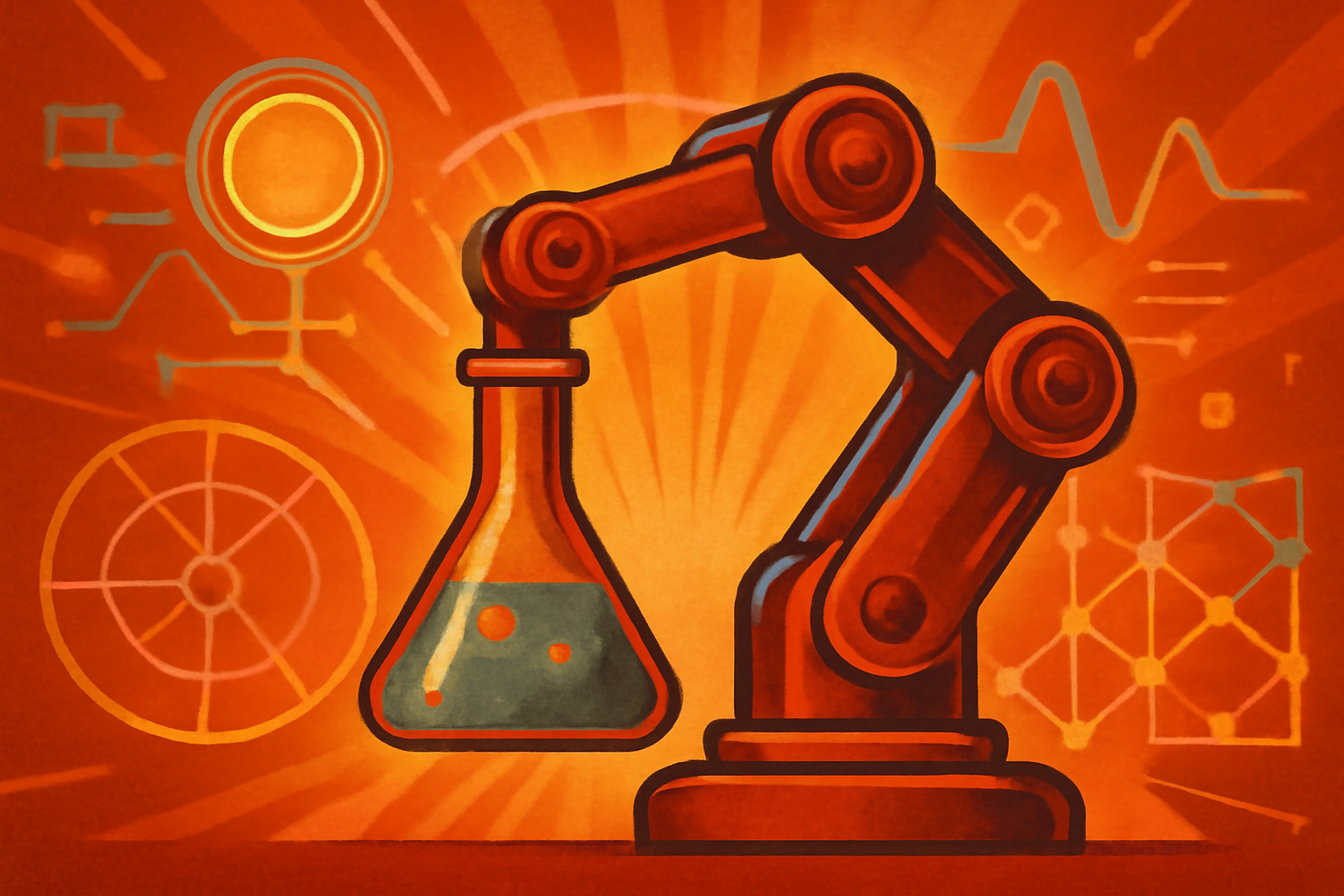
Digital molecular structures and data graphs appear as holograms over a modern chemistry laboratory setup with beakers and scientific equipment.
Photo: Avantgarde News
Artificial intelligence agents are transforming the field of chemistry by completing complex catalyst research tasks in minutes that previously required days of computational work [1]. These AI tools allow scientists to move rapidly from initial simulations to industrial applications [1][2]. By automating the discovery process, researchers can identify efficient materials for energy and manufacturing at an unprecedented pace [2].
Initiatives such as the Open Catalyst project are expanding standardized datasets to further improve the accuracy of these models [1]. Scientists at institutions like Tohoku University have successfully integrated these advancements into their research workflows to streamline chemical engineering [3]. These developments, including tools like "Catalyst Agent," represent a significant leap in computational speed and efficiency [2].
Editorial notes
Transparency note
AI assisted drafting. Human edited and reviewed.
- AI assisted
- Yes
- Human review
- Yes
- Last updated
Risk assessment
Reviewed for sourcing quality and editorial consistency.
Sources
- 1.↗
chemistryworld.com
https://www.chemistryworld.com/features/ai-agents-accelerate-catalyst-discovery-from-simulation-to-scale-up/4023643.article
- 2.↗
machinebrief.com
https://www.machinebrief.com/news/ais-leap-in-catalyst-discovery-meet-catalyst-agent-x1hq
- 3.↗
wpi-aimr.tohoku.ac.jp
https://www.wpi-aimr.tohoku.ac.jp/en/achievements/press/2026/20260326_002166.html
Related stories
View all
Topics
About the author
Avantgarde News Desk covers standardized data fuels scientific breakthroughs and editorial analysis for Avantgarde News.